REVIEW · THE ROCKS TOURS
Sydney Walking Tour including The Rocks (small group)
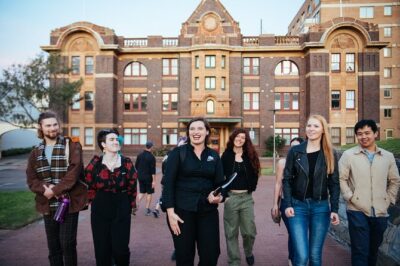
Sydney’s past starts right under your feet. This small-group Hyde Park to The Rocks walk, limited to 16 people, turns famous landmarks into stories spanning Indigenous wisdom, convicts, and city builders; I love the small-group size and I love how the guide connects 60,000 years of change along the route.
I like the way the tour gives you an instant map of the city center, from St Mary’s Cathedral down through the legal precinct and convict-era sites. Stop highlights include Hyde Park Barracks and the Rum Hospital story tied to the Sydney Eye Hospital area, where early healthcare had an unusual link to rum.
The only real drawback is the walking time and sun exposure, about 2 hours 30 minutes with mostly outdoor stops. You’ll want comfy shoes and a hat, since the pace can feel like a workout for anyone with medical limits, and Sydney heat is no joke.
Key highlights at a glance

- Max 16 travelers keeps the group easy to manage and makes Q and A practical
- 60,000 years of Sydney in one walk, connecting Indigenous, convict, and colonial eras
- Sydney Eye Hospital site and the Rum Hospital connection gives you a story you won’t forget
- The Rocks lane network includes Suez Canal, Nurses Walk, Playfair Street, and Argyle Street
- Campbells Cove finish lands you near Circular Quay, lunch options, and harbour views
Why this Hyde Park to The Rocks route is such a good first Sydney move

This tour is a smart way to get your bearings fast. You start in Hyde Park, move through the city’s major landmarks and historic institutions, then end in The Rocks with the harbor right there. It’s the kind of route that makes future sightseeing easier, because you understand what you’re looking at.
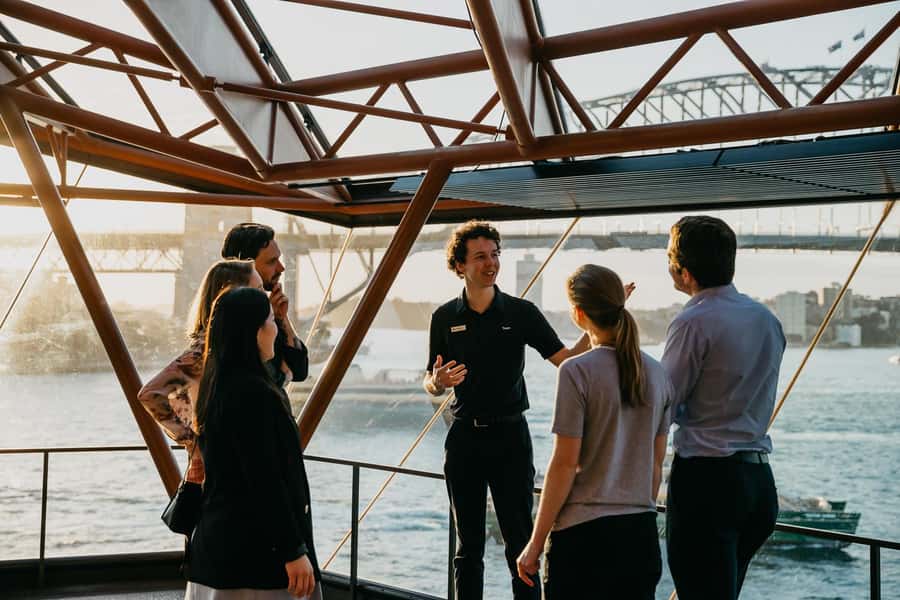
I like that the format supports actual conversation. With a maximum of 16 people, you’re not stuck behind a wall of hats and shoulders. In the guide writeups, Lily is the name I see most often, and I also noticed other guides like Laina, Lele, and Leilani mentioned.
The tour also has a clear storytelling theme: how Sydney got shaped by many cultures and hard realities, not just pretty buildings. Expect talk of Indigenous knowledge, convict struggles, and early city-making. That mix is exactly why this walk feels more useful than a standard “look at that” tour.
You can also read our reviews of more walking tours in Sydney
Hyde Park and St Mary’s Cathedral, where your city orientation begins

You kick off at the Archibald Memorial Fountain in Hyde Park North on Elizabeth Street. It’s a good meeting point because it’s central and easy to recognize, and it sets the tone with green space before the hard-city details.
Hyde Park itself is more than a rest stop. It’s Australia’s oldest park and a classic “pause button” in the middle of downtown, which matters on a walking tour. If the day is sunny, you’ll appreciate how often you can regroup in open-air space around it, then move on.
Next comes St Mary’s Cathedral, a Gothic landmark that immediately helps you understand why Sydney has always borrowed from European styles. The cathedral’s scale is the point here, but the best part is the context, how it connects to Sydney’s Catholic heritage.
This segment is short, but it works like a preface. You leave Hyde Park and St Mary’s with a sense of where the city’s religious and public-power buildings sit in relation to everything else.
Hyde Park Barracks, Queen’s Square, and the Rum Hospital twist at Sydney Eye Hospital

One of the strongest stops is Hyde Park Barracks. It’s UNESCO listed, and it pulls you into the convict-era side of Sydney in a way you can actually picture: the site once functioned as a convict prison, then later as an immigration depot. Even with just a few minutes here, the meaning lands fast.
From there, the walk heads into Queen’s Square, where the vibe shifts to law and governance. The surrounding Supreme Court and Law Courts Building area is the kind of place that can look intimidating if you don’t know what role it played. Here, you get the short version of why this legal precinct mattered.
Then you reach the surprise story: the Sydney Eye Hospital area, tied to the Rum Hospital. The idea that early public healthcare was shaped through a deal involving rum is the sort of detail that turns a “historical building” into a human story. It also helps you see how trade, money, and policy mixed early on.
This section is also where I’d call out a practical tip. On a hot day, you’ll want to stay hydrated and listen for the guide’s pacing cues. In the guide feedback I saw, Lily and other guides were careful about heat, often timing stops so people could step into shade where available.
Macquarie Street, Botanic Garden, and the colonial power-and-people mix

Macquarie Street is the move that helps you connect buildings to authority. This is where you see the “power and history” side of Sydney, with a long stretch of architectural landmarks tied to government and civic leadership. It’s the kind of street that makes you realize Sydney grew in layers, not in one big jump.
Then you’re at Royal Botanic Garden Sydney, a different pace again. This stop matters because it brings Aboriginal culture into the conversation in a respectful way, not as an afterthought. Even if you only get a short look, you’ll start thinking of the garden as more than plants, it’s also a place where culture and knowledge meet.
Next is Sydney Conservatorium of Music, which is housed in the Old Government Stables. That detail changes how you read the building. Stables are practical, but the location makes you think about how governors and institutions actually worked before modern transport.
If you’re trying to understand Sydney’s timeline, this is one of the best “bridge zones.” You go from government street power to nature and cultural connection, then to a building that reminds you of everyday logistics.
The Edge of the Trees and Macquarie Place Park for meaning, not just photos

A quick stop at The Edge of the Trees adds a reflective moment to the tour. This artwork is meant to remind you of the intersection between Aboriginal and European cultures. It’s not a “busy landmark,” it’s an idea you carry with you as the walk continues, especially once you head back into The Rocks.
Then you reach Macquarie Place Park, a small space with outsized history. It’s described as Sydney’s first public space, and you may also spot artifacts here. Even with limited time, the point is clear: public space didn’t just happen, it developed as the city changed.
These two stops are short, but they give your brain something to do besides admire architecture. If you like context, this pair is a nice reset before the harbor trade story and The Rocks lanes.
- Blue Mountains Small-Group Tour from Sydney with Scenic World,Sydney Zoo & Ferry
★ 5.0 · 3,709 reviews
Customs House and the harbour economy you can almost feel

Customs House is where the walk turns toward trade. You’re in the area that once oversaw ships arriving with goods, so it’s a direct route into why Sydney’s port mattered. This is one of those buildings that makes you think about scale, even if you never see the ships up close during the tour.
From here, it’s easier to understand the city as a system: labor, arrivals, and the movement of goods. It also sets you up for The Rocks, where trade and rougher city life lived side by side.
If you’re a first-timer, this portion helps you connect street names to what used to happen on them. You start to see Sydney not as separate attractions, but as one working machine.
The Rocks laneways, from Suez Canal to Argyle Street and George Street

Now for the neighborhood you came for: The Rocks. This is the historic heart, and the tour treats it like a living museum. Cobblestone lanes and sandstone buildings make it easy to imagine convict-era days, but the guide’s stories are what do the heavy lifting.
One of the most fun, and most telling, stops is Suez Canal. The name might make you think of geography, but here it’s presented as an underworld-style laneway, tied to criminals and shadowy characters. It’s a quick stop, yet it gives the area personality.
Then comes Nurses Walk, where the focus is on early nurses and the challenges faced by pioneering women. This is one of those details that adds balance, because not every walking tour covers the people who cared for others.
You also pass by Playfair Street, a charming lane that helps you see how narrow streets shaped everyday movement. After that, Argyle Street brings you into the busiest “present day” energy of The Rocks, while still referencing its commercial past. Finally, George Street keeps the story moving, showing how heritage and modern life overlap in this area.
A quick heads-up: The Rocks is more “walk and look” than “stand and read.” If you like taking long photo breaks, you might feel a bit rushed in the lanes. On the other hand, this fast pace is why the tour works as an intro. You’ll leave knowing which side-streets deserve a second look on your own.
Campbells Cove finish, where the views and lunch options line up

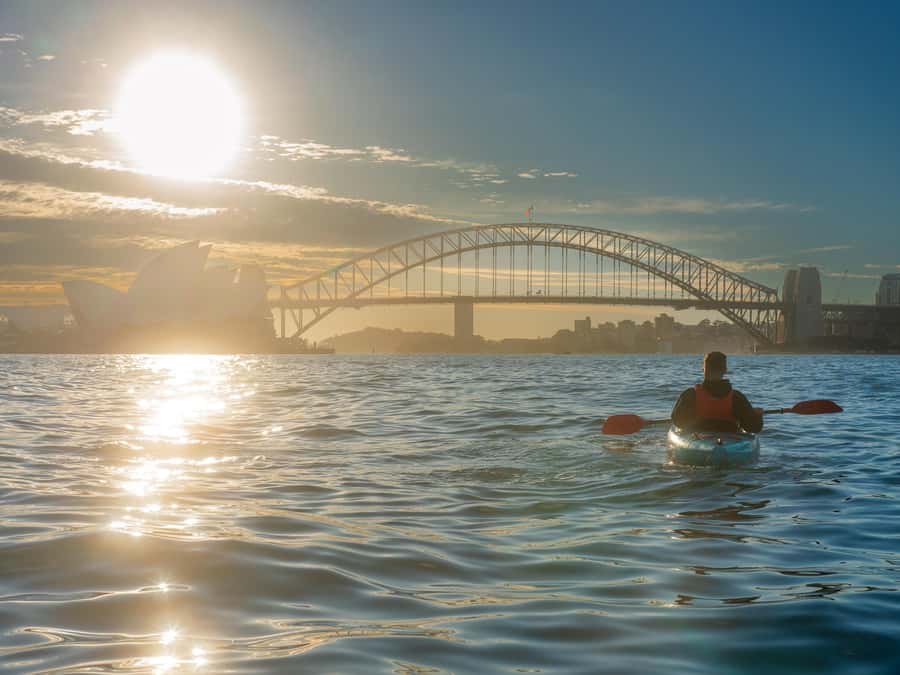
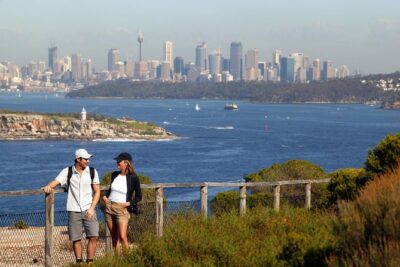
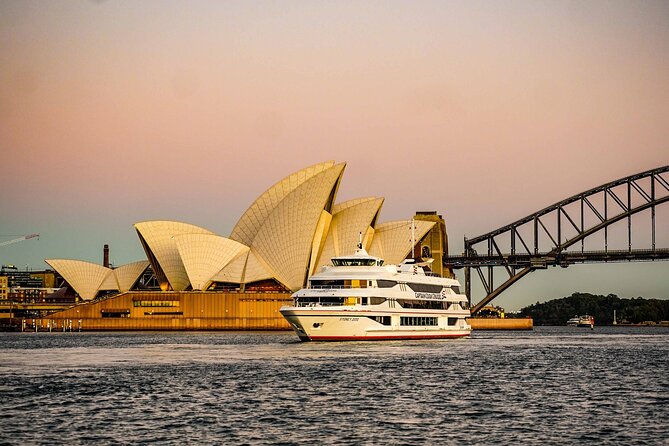
The tour ends at Campbells Cove near Circular Quay. It’s a practical finish, because you’re close to transport and easy food choices. The harbor views are a bonus too, with the Opera House and Harbour Bridge showing up at the end when your legs are already done doing their job.
This is also a good spot to transition from tour mode to plan mode. If you want to keep exploring, you’re positioned for it. You can head toward Circular Quay, grab lunch in The Rocks, or take a longer walk along the waterfront.
The best thing about ending here is that the city looks different when you’ve just learned how it grew. Before the walk, you might see the bridge as a photo backdrop. After, you start seeing it as part of the old arrival routes and trade-driven growth the guide mentioned earlier.
Price and pace, plus what to bring for Sydney heat
At $32.28 per person for about 2 hours 30 minutes, the value is tied to two things. First, it’s a full guided route across multiple major sites, not just a single neighborhood loop. Second, the tour’s stops include several free-admission locations, so you’re paying mainly for the interpretation and route planning.
The group size, capped at 16, is part of that value. You’re not paying for a crowd, you’re paying for a guide who can keep the group together and answer questions.
Pace is generally manageable for moderate fitness, but this is still real walking. Wear comfortable shoes. Bring sunscreen and a hat, especially if you’re doing this in midday sun. In the guide feedback, I saw clear emphasis on heat management, including keeping people in shade when it was available, which is exactly what you want from a good guide.
Also, bring a charged phone. You’ll use a mobile ticket, and it helps to have it ready at check-in time. Service animals are allowed, and the meeting point is near public transportation.
Who should book this Sydney Walking Tour including The Rocks?
You should book if you want a first-day, “get oriented” tour that also gives you real context. This works especially well for:
- First-time Sydney visitors who want an efficient route through the city center and The Rocks
- People who enjoy stories about people, not just buildings
- Anyone who wants a small group experience, with time for questions
- Travelers planning to return later to specific sites, because the guide should point out where to spend more time
You might skip it if you hate walking in a group, even a small one. The Rocks lanes can feel like a lot of steps for people who prefer slow sightseeing, and the day is still outdoors for a big chunk of the tour.
Should I book this The Rocks small-group walk?
Yes, if you want a high-value intro that connects the dots between Hyde Park, convict-era sites, the harbor economy, and the street-level stories of The Rocks. The strongest reason to book is the combination of small group size and the way the guide ties the big landmarks to human realities, including Indigenous history and convict struggles.
If you’re deciding between a quick highlight tour and a deeper orientation, this one sits in the sweet spot. You’ll finish with better context, a shorter list of what to revisit, and an easy location for lunch and transport at Campbells Cove.
FAQ
How long is the Sydney Walking Tour including The Rocks (small group)?
The tour lasts about 2 hours 30 minutes.
How large is the group?
The tour is limited to a maximum of 16 travelers.
Where do I meet the tour, and where does it end?
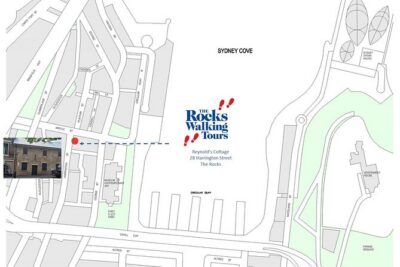
You meet at the Archibald Memorial Fountain, Hyde Park North, 110 Elizabeth St, Sydney NSW 2000. The tour ends at Campbells Cove, 4 Circular Quay W, The Rocks NSW 2000.
What time does the tour start?
The start time listed is 10:30 am.
Are admission tickets required for the stops?
The stops shown in the tour schedule are marked as admission ticket free.
Is the tour suitable for people with moderate physical fitness?
Yes. The tour notes a moderate physical fitness level.
Are service animals allowed?
Yes, service animals are allowed.
What is the cancellation policy?
Free cancellation is available up to 24 hours in advance for a full refund. Canceling less than 24 hours before the start time is not refunded.
More Walking Tours in Sydney
More Tours in Sydney
- Blue Mountains Small-Group Tour from Sydney with Scenic World,Sydney Zoo & Ferry
★ 5.0 · 3,709 reviews
More Tour Reviews in Sydney
- Blue Mountains Small-Group Tour from Sydney with Scenic World,Sydney Zoo & Ferry
★ 5.0 · 3,709 reviews
Not for you? Here's more nearby things to do in Sydney we have reviewed
More The Rocks Tours
★ 5.0Sydney The Rocks Guided Walking TourFrom $321,546 reviews
★ 4.7The Rocks 90-Minute History Walking TourFrom $321,092 reviews
★ 4.5The Rocks Ghost Tours with Guide in SydneyFrom $39482 reviews
★ 5.0The Rocks Pub Walking TourFrom $82447 reviews
★ 5.0Convicts and The Rocks: Sydney’s Walking Tour Led by HistorianFrom $37304 reviews
★ 5.0Sydney The Rocks Historical Pub TourFrom $82251 reviews
★ 4.9City & The Rocks 3.5-Hour Walking Tour with a DrinkFrom $53234 reviews
★ 4.9Sydney Convicts, History & The Rocks 2.5-Hour Walking TourFrom $36181 reviews
Explore related Sydney days