REVIEW · SYDNEY
Discover Sydney
Sydney turns into a game fast.
This self-guided trail has 18 clue steps on your smart phone, and I like that the process feels bite-sized because you only move forward after you get each answer right. I also love the clock behavior, where it pauses when you answer correctly so you are not sprinting, you are sightseeing. One consideration is simple: you need a working device and a willingness to walk between a few central spots.
You start at 50B Pirrama Rd, Pyrmont, work your way through key areas like Darling Harbour, QVB, and end in a pub in Circular Quay. Your group name and time show up on a leaderboard at the finish, which is a fun touch for teams without making it feel like a race.
Key things to know before you go
- Self-guided phone clues: you request the next clue and solve it to earn the next step
- 18 total clues, expected 2-3 hours from start to finish
- Clock pauses on correct answers, so you can slow down and enjoy the walk
- Help and Hint options if a question gets tricky
- Ends at a pub in Circular Quay, giving the trail a satisfying finale
- Private group experience for up to 6 people in your party
A phone-led scavenger trail through Sydney’s highlights

This is not a guided lecture. It is a self-guided clue trail that guides you with prompts on your smart phone. The format is designed to be friendly: get an answer correct, then you receive the next clue. If you get stuck, you have Help and Hint options, plus the option to look things up on your device.
For me, the best part is how quickly you start moving. You do not have to figure out a route map from scratch. You follow the game, and the city fills in the rest. It also makes the experience easy to repeat in your head afterward, because you remember the clues you solved and the order you solved them in.
There is also a built-in social payoff. Your team name and time appear on a leaderboard at the end. That means you get bragging rights without needing a live guide to keep score.
You can also read our reviews of more tours and experiences in Sydney.



Starting at 50B Pirrama Rd in Pyrmont, then stepping into the clues
Your trip begins at 50B Pirrama Rd, Pyrmont. That is helpful because you can meet up with your group at a single, specific address instead of chasing a vague landmark.
When you are ready, you hit the flow button, usually called Next Clue. The clock starts when you set off, then it pauses each time you get a clue answer correct. In practice, that changes how the trail feels. You are encouraged to work carefully instead of racing the timer, and it gives you time to stand where you are, read the clue fully, and coordinate with your group.
Tip: if you are doing this as a team, decide early how you want to play. One person reads clue text. Another person types answers. Someone else keeps an eye on Help and Hint. You will lose less time that way, and you will feel calmer even if you hit a tough one.
Darling Harbour clues: a strong warm-up zone for your first answers
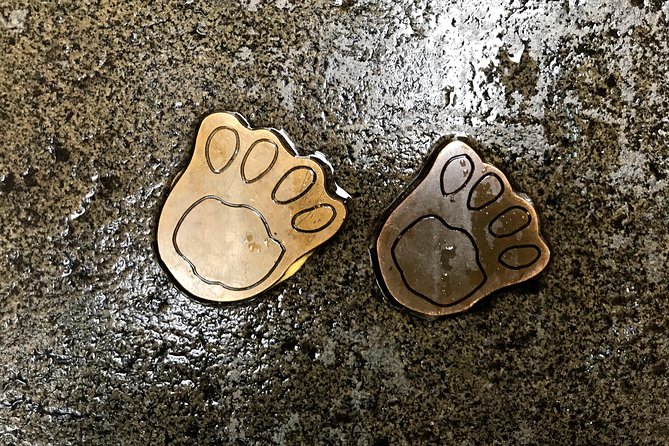
Your first stop is Darling Harbour. It is a smart choice for an opening stretch, because you land in a busy, recognizable part of the city and start solving right away.
At this stage, your main job is to learn the rhythm:
- read the clue prompt on your device
- figure out the answer
- submit it
- only then do you move to the next step
Because there are 18 clues total, the early ones set the tone. If you feel a little uncertain at Stop 1, do not panic. The trail is designed to keep going even when you need a nudge. Use Help if you are stuck, or Hint if you want to steer yourself back on track.
Possible drawback here: if your group prefers guided explanations, the self-guided nature may feel like you are doing the work yourself. The good news is that you are still getting the structure and the walking route from the clue sequence.
Sydney stop: turning normal streets into problem-solving moments

After Darling Harbour, you move on to the next area, labeled Sydney. This mid-route section is where the trail starts to feel like an actual city walk, not just an app-driven start.
This part of the route matters because it is usually where groups settle into their teamwork style. Some teams split into roles. Others pass the phone around and talk it out. Either way, this segment is where you start learning how quickly you can solve clues and how much time you want to spend checking details on your device.
One thing I like about the trail design is the pacing system. Since the clock stops when you answer correctly, you can take extra moments to confirm answers without burning through your overall time. For a team setting, it reduces the pressure that can make puzzle activities feel competitive in the wrong way.
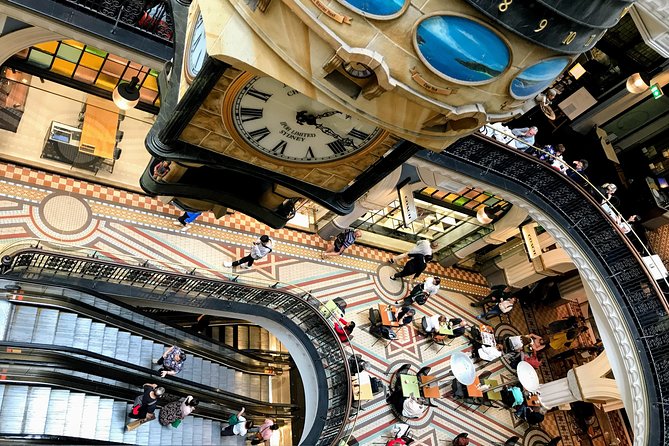
QVB (Queen Victoria Building): a classic Sydney anchor for your mid-trail reset

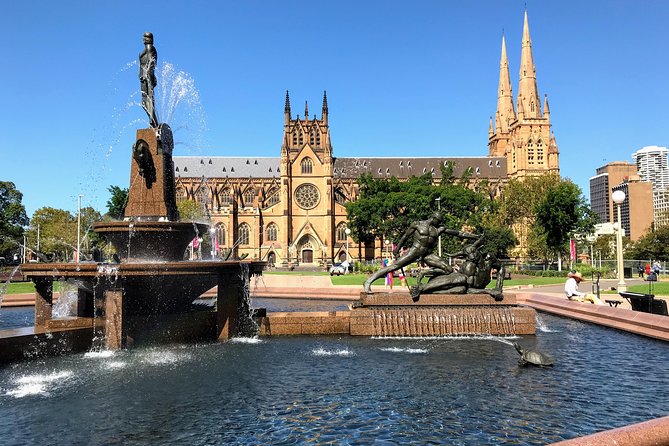
Your third stop is QVB, the Queen Victoria Building. Even if you already know Sydney, a central, well-known landmark-style stop tends to do two things for a clue trail.
First, it gives you a reference point. With a landmark name like QVB, your group can confirm you are in the right area before you sink time into solving.
Second, it works as a mid-trail reset. By the time you reach Stop 3, you have already solved a chunk of clues. The experience shifts from learning the mechanics to using your clue-reading skills efficiently. That can make the rest of the walk feel smoother.
Possible consideration: if your group is exhausted by puzzle work, this stop can either help or hurt depending on your mood. The trail keeps going in the same format, so if you are hoping for long breaks or photo stops with zero mental effort, you may want to pace yourselves with the clue pauses.
- Blue Mountains Small-Group Tour from Sydney with Scenic World,Sydney Zoo & Ferry
★ 5.0 · 3,709 reviews


Circular Quay ending in a pub: why the finish line feels right

Your final stop is Circular Quay, and the trail ends in a pub there. Ending with a real-world treat changes everything. You do not have to wonder where the walk stops or whether you will need to plan your own post-walk meeting spot.
It also makes the experience feel complete. You spend the middle of the trail working through clues, then you land somewhere social and familiar. That is especially valuable if you are doing the trail with friends who have different styles: one person likes puzzles, another just wants to see the city, and the group still gets a shared payoff.
The leaderboard at the end adds a light, fun finish. Seeing your time and team name on the board is a small moment, but it is the kind of detail that turns a casual outing into an event.
How much is it, really, and why it can feel like good value
The price is $39.45 per group, up to 6 people. That makes it a very different deal than per-person sightseeing tours.
If you fill a full group of 6, the cost per person works out to roughly $6.60 each. Even if you come as a smaller group, you are still paying as a unit, not per head. For a 2-3 hour activity, that can be excellent value, especially when you treat it as a way to plan a walk for you instead of spending extra time figuring out a route.
There is also a practical value angle. The trail gives you a built-in structure: 18 clues, a start point, a guided sequence, and an ending location. That is time you do not have to spend mapping. It can be a low-stress way to do a “tour day” even if you live locally and rarely slow down.
Two situations where it is especially worth it:
- You want something active without the pressure of a traditional guided tour
- You want a team-friendly activity that still ends with a social spot
Timing and pacing: how to enjoy the trail instead of rushing it
The activity is listed as about 2 hours 30 minutes, and the expected total is 2-3 hours. The pacing system matters: the clock stops every time you get an answer correct, so you can take your time.
That means you do not need to sprint between clue locations. You can pause to read, talk things through, and solve without feeling like you are burning time the whole way.
Practical advice:
- Start with everyone on the same page about how you will use Help and Hint
- Keep your phone charged and easy to reach
- If the group disagrees on an answer, use Hint to avoid getting stuck for long stretches
Also, note that you can choose when to move on by selecting Next Clue. If you need a bathroom break or a quick regroup, you can do it without destroying the spirit of the activity, because the trail is built around clue completion, not constant motion.
Getting the most out of Sydney with a team format
This is especially good for teams. The structure naturally supports group talk, decision-making, and shared problem-solving. People who might not normally participate in a typical sightseeing outing can still contribute, because the clues invite everyone into the same game.
If you are planning a work team activity, it can serve as a simple “active team-building” option. It also tends to work well because you are all doing the same route in parallel, and the leaderboard gives everyone a light finish-line moment.
For locals, the appeal is different but real. If you live in Sydney, you already know the big names. What you might not do is follow a planned walking route that asks you to slow down and pay attention. A clue trail nudges you to look closer and learn a few new things without feeling like homework.
For tourists, it is a way to see a handful of central areas with less mental load. Instead of planning and re-planning, you follow the next clue and let the city unfold as you go.
Who should book this, and who might skip it
Book it if:
- you like walking and want an activity that feels interactive
- you want a team-friendly outing for up to 6 people
- you prefer self-paced sightseeing with built-in nudges like Help and Hint
- you want a structured route that ends at a pub in Circular Quay
You might skip it if:
- you hate clue or quiz-style activities, even if they are designed to be easy
- your group wants a live guide to explain details
- you are unlikely to have a reliable smart phone during the walk
Should you book Discover Sydney with Trixity Trails?
If you want a low-pressure way to explore Sydney with your group, I think this is a smart booking. The cost is per group, the pacing is designed around clue completion, and the finish at a pub in Circular Quay makes it feel like more than a random walk.
The only real gamble is whether your group enjoys the puzzle style. If you do, you will likely feel like you got a full, satisfying outing out of 2-3 hours. If you do not, it may feel like too much thinking for the payoff you want.
FAQ
How long does the Discover Sydney trail take?
It is expected to take about 2-3 hours, with an approximate duration listed as 2 hours 30 minutes.
How many clues are included?
There are 18 clues in total.
Does the clock keep running the whole time?
No. The clock stops automatically each time you get an answer correct, and it starts again when you select Next Clue.
Where does the trail start and end?
It starts at 50B Pirrama Rd, Pyrmont NSW 2009, Australia. The activity ends back at the meeting point.
What stops are included?
The route includes Darling Harbour, Sydney, Queen Victoria Building (QVB), and it ends in Circular Quay.
What is the group size and pricing?
The price is $39.45 per group for up to 6 people.
Is it private?
Yes. Only your group participates.
Are service animals allowed?
Yes, service animals are allowed.
Is free cancellation available?
Free cancellation is available up to 24 hours in advance for a full refund.
More Tour Reviews in Sydney
- Blue Mountains Small-Group Tour from Sydney with Scenic World,Sydney Zoo & Ferry
★ 5.0 · 3,709 reviews