
REVIEW · PHOTOGRAPHY SESSIONS
Photography Essentials Workshop in Sydney Harbour Foreshore
Good photos start with better habits. This 4-hour Sydney Harbour Foreshore workshop turns famous viewpoints into real practice, with hands-on coaching from an award-winning, Sydney-based photojournalist. I like that you cover all camera modes, then move into true manual control so you stop guessing. I also like the tight on-location plan, with stops at the Opera House, Harbour Bridge, Circular Quay, and the Rocks. One drawback to plan around: it is not suitable for compact cameras that lack full manual capability.
You meet at Customs House, then spend the half day walking and shooting while your tutor keeps pulling you back to fundamentals like composition and lighting. Based on past student feedback, instructors such as Daniel Linnet are praised for clear, easy-to-follow teaching. The payoff is practical, not theoretical, because you learn what to do and then do it right away on the footpaths.
Key things I’d pay attention to
- Small group size (max 10) means you can actually ask questions instead of watching from the back row
- Manual mode focus gives you creative control, not just automatic point-and-shoot results
- On-location practice across iconic and quieter harbour spots makes lessons stick
- Composition + lighting are the core so your photos improve even when the view looks similar
- A pre-visualisation mindset helps you plan a shot before you press the shutter
Customs House meet point, then straight to shooting
This workshop is built for momentum. You start at Customs House, 31 Alfred St, Sydney NSW 2000, at 12:00 pm, and the activity ends back at the meeting point. In other words, you’re not guessing where to go or losing time with a long intro lecture.
The setting is half the fun. Starting right on the harbour side means you’re surrounded by big shapes, strong reflections, and changing light, all the stuff that makes photography both exciting and tricky. Also, since the group is limited to 10 people, you’re likely to get quick feedback while you’re still thinking about what you just tried.
One more thing I like for a short workshop: it’s designed around walking and shooting, not just standing still. That suits the practical goal, which is learning how to create a fantastic image, not only collecting a few Instagram-style angles.
You can also read our reviews of more photography tours in Sydney
Camera modes to manual control, without the fog
The core promise here is learning what your camera can do, then using it deliberately. You start at the beginning, with how your camera, lenses, and essential kit fit into the process. From there, the instruction moves through the different shooting modes so you understand what each one is for and when you’d use it.
Then the lesson pivots into the part that usually scares people: manual mode. The workshop aims to give you true creative control, which means you learn how to set exposure and work with what the light is actually doing. Instead of treating your camera settings like random numbers, you connect them to what you want the final image to look like.
What makes this valuable is the blend of logic and creativity. You’re not only taught settings. You’re also taught how to think ahead, including pre-visualising a photograph. That’s a big deal in real cities, because lighting changes fast and crowds make timing everything. If you can picture the image before you lift the camera, you spend less time fumbling and more time making.
The one “fit” check you should do first
The workshop is for cameras that support full manual. It explicitly includes SLR and mirrorless cameras with manual capability, and it is not suitable for compact cameras without full manual control. If your camera only gives you limited tweaking, you’ll likely find the manual instruction frustrating rather than empowering.
Opera House stop: framing sails, lines, and real-world angles
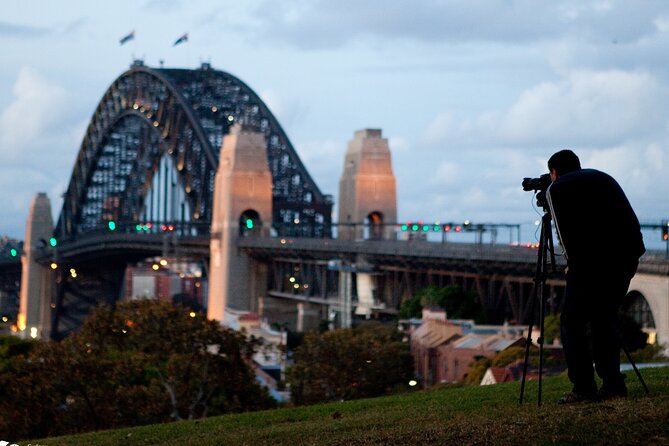
The first big anchor is the Sydney Opera House. You’re dealing with a subject that is both iconic and visually complex, because there are repeating curves, dramatic geometry, and lots of reflective surface area around the harbour.
In a workshop like this, the real win is not learning a single magic viewpoint. It’s learning how to use composition techniques on a complex scene. You get practice thinking about placement in the frame, how leading lines can pull the eye, and how to simplify the scene so your viewer understands what matters.
You also learn to work with lighting conditions right away. Harbour light can swing quickly, especially around midday. When you’re on manual control, you stop hoping the camera will fix the scene and start shaping it.
A practical note: this stop can attract other photographers. Your advantage is that you’re not just taking a photo. You’re experimenting with settings and composition based on what you’re seeing, which usually leads to more variety than you’d get from copying someone else’s angle.
Harbour Bridge and Circular Quay: controlling contrast and timing
Next you move toward the Sydney Harbour Bridge and then Circular Quay. Together, these stops are a crash course in the kind of photographic problems that pop up constantly: harsh contrast, bright reflections off water, and scenes with both dark structures and bright sky.
This is where the “lighting is a main key” teaching approach pays off. You’ll be practicing how to set up your shot so it looks the way you intended, even when the scene is demanding. Manual mode training matters here because automatic exposure often chases the brightest area, leaving key details too dark, or it averages everything and flattens the drama.
Circular Quay adds another layer: it’s a high-activity area with multiple visual distractions. That’s a good learning environment. You get to practice selecting what your photo is actually about. In plain terms, you’ll learn to stop taking a picture of everything and start taking a picture of one idea.
If you’re the type who loves the skyline but hates how your photos look “off,” this pair of stops is where that mismatch usually starts to disappear. You’ll be forced to decide what matters, then choose settings that support that decision.
More Sydney harbour days, city walks, coastal outings, and regional escapes worth considering


What you should do at these stops
Aim for fewer shutter clicks with better intention. The instruction style here is built around learning, so treat each attempt like a mini experiment. You’re not just collecting images. You’re building a repeatable way to approach lighting and composition.
The Rocks Precinct: turning a classic area into your own shot
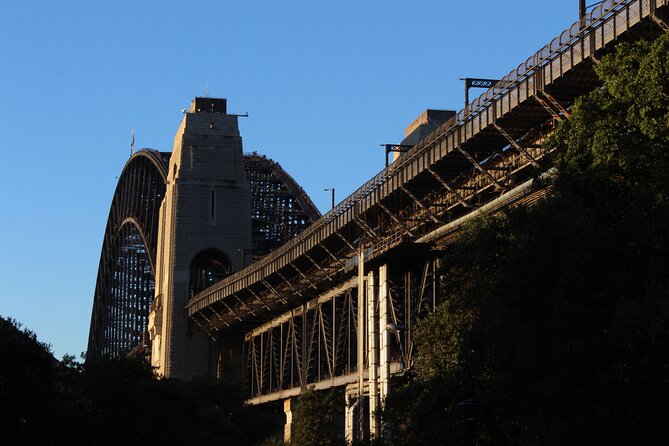
The final working zone is the Rocks precinct. The Rocks is great for photography because it mixes strong location identity with lots of smaller details. Even when you’re photographing something that tourists recognize, you can still make the image feel personal by focusing on texture, angles, and layers.
This is also where composition lessons can get more fun. You can experiment with framing and perspective in ways that don’t work as well at huge monument-scale locations. Because you’re learning to pre-visualise, you can walk into an area and think, What would make this feel like a story instead of a postcard?
And because the workshop explores both well-known and also quieter spots around the foreshore, you get a chance to see more than the “always photographed” corners. That matters for people who already know the big sights and want their photos to look like they came from planning, not luck.
One more reason this stop feels rewarding: by the time you reach the Rocks, you’ve had multiple chances to practice settings and composition. The workshop timing helps. You’re not learning manual mode at the end and hoping it sticks. You’re using it repeatedly, then applying it to a different type of scene.
What you take home, beyond the photos you already wanted
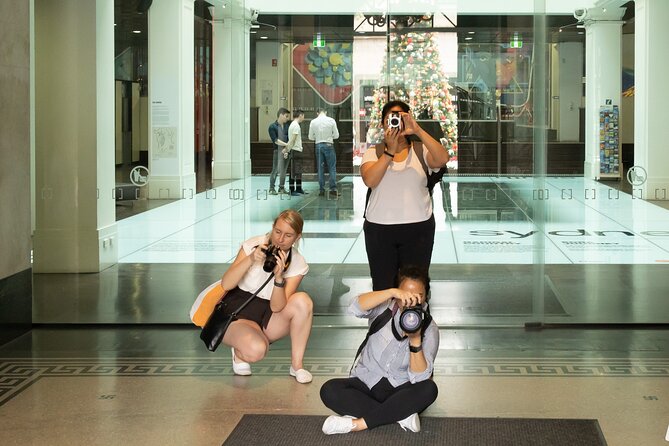
This is marketed as a photography essentials class, and it behaves like one. The focus is on the fundamentals that help you improve fast, especially if you’re a beginner or you want a clean restart after time away from your camera.
Here are the skill areas you’ll be building as you go:
- Understanding shooting modes so you can choose intentionally, not randomly
- Working in manual mode to gain creative control over how bright or dark your scene looks and how motion and depth show up
- Simple compositional techniques you can reuse on any subject, even when you change cities
- Lighting awareness so you start noticing how time of day changes your results
- Pre-visualisation so you build a shot before you commit to the click
I also like the way the workshop is framed for real camera users. It’s suitable for any camera with full manual capability, which covers a lot of people. And the course is designed as a true introduction to digital photography, so it isn’t only aimed at people who already know every setting.
Based on prior student praise, an especially strong aspect is the teaching style. Past feedback highlights instructors like Daniel Linnet as clear and easy to follow, and another review thanked the team for such an incredible learning experience, with on-street practice described as the bridge between theory and real results. That matters, because photography lessons often fail when they stay stuck in explanations.
Price and value for a half-day on the harbour
The cost is $107.59 per person for about 4 hours. That works out to roughly $27 per hour, give or take. For Sydney, that’s not “cheap,” but it is plausible value when you consider what you’re buying: a professional tutor, instruction built around manual control, and on-location practice at major sights.
Here’s why I think the value makes sense: a good photography workshop saves you time. Instead of spending months trial and error, you get guided attempts at the exact places where light and composition get complicated. The tutor also helps you connect camera settings to visual outcomes, which is the shortcut most people need.
The group size cap at 10 also supports value. If this were a huge class, you’d spend more time waiting and less time shooting. In a small group, you’re more likely to get relevant feedback while you’re still working through the lesson.
Also, the workshop uses mobile tickets, which is a small detail, but it keeps the admin from turning into a hassle during a short half day.
Who should book this, and who should skip it
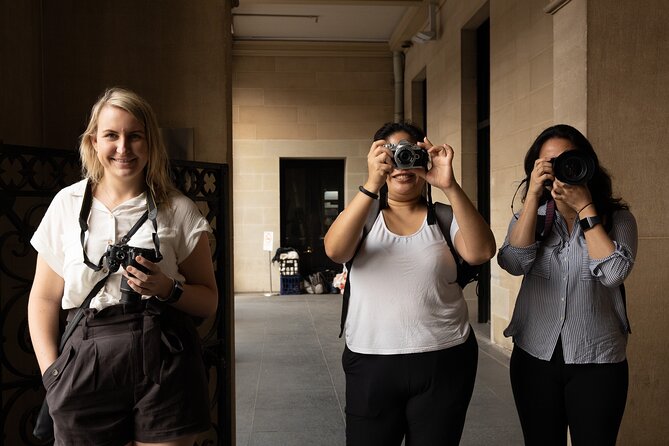
This workshop is a strong fit if you:
- Want a clear, structured start in photography, or want a refresh of basics
- Have a camera with full manual capability (SLR or mirrorless is explicitly included)
- Prefer learning by doing, with on-street shooting rather than sitting through slides
- Like the idea of improving your eye for composition and lighting
It’s probably not the best fit if you:
- Use a compact camera that cannot run full manual settings
- Want a tour that is mostly sightseeing with casual photo tips
- Are looking for something longer and deeper than a half day
And one more practical consideration: the workshop lists moderate physical fitness. It’s still a walk-and-shoot style experience, so choose comfortable clothing and shoes that can handle city footpaths.
Should you book Photography Essentials in Sydney Harbour Foreshore?
If you have a manual-capable camera and you want your harbour photos to look like you planned them, I’d book it. This isn’t just about photographing the Opera House or the Bridge. It’s about learning how to control the camera and your thinking, then applying it immediately while you’re surrounded by challenging light.
I’d especially recommend it if you’ve ever stared at your photos and thought, I know what I wanted, but my settings got in the way. The manual mode focus, the repeated practice on location, and the emphasis on composition and lighting are exactly what help that problem.
If you’re using a compact camera without full manual control, save your money and look for something that matches your gear. Otherwise, this half day has a nice balance of classic Sydney views and the kind of coaching that helps your next shoot go better too.
FAQ
How long is the Photography Essentials Workshop?
It runs for about 4 hours.
Where does the workshop start?
You start at Customs House, 31 Alfred St, Sydney NSW 2000.
What sights are included?
The workshop includes stops at the Sydney Opera House, Sydney Harbour Bridge, Circular Quay, and The Rocks.
What time does it start?
The start time listed is 12:00 pm.
Is this class suitable for beginners?
Yes. It is described as a great start for beginners, or for people who want to be reintroduced to photography.
Will my camera work if it is an SLR or mirrorless?
Yes. The workshop is suitable for cameras with full manual capability, including SLR and mirrorless cameras.
Is it suitable for compact cameras?
No. It is not suitable for compact cameras without full manual capability.
What is the group size?
The workshop has a maximum of 10 travelers.
What happens if weather is poor?
The experience requires good weather. If it is canceled due to poor weather, you will be offered a different date or a full refund.
Is free cancellation available?
Yes. You can cancel up to 24 hours in advance for a full refund.
More Workshops & Classes in Sydney

More Photography Tours in Sydney
More Tour Reviews in Sydney
- Blue Mountains Small-Group Tour from Sydney with Scenic World,Sydney Zoo & Ferry
★ 5.0 · 3,709 reviews


Not for you? Here's more nearby things to do in Sydney we have reviewed


More Photography Sessions
 ★ 4.6Private Photoshoot outside the Opera HouseFrom $10640 reviews
 ★ 5.0Sydney Photography Course in the Historic Rocks Area35 reviews
 ★ 5.0Photoshoot in stunning locations! (sydney)From $22026 reviews
 ★ 4.9Private photo tour at Sydney’s most iconic locationsFrom $15912 reviews
 ★ 3.5Professional Photoshoot at Opera HouseFrom $6910 reviews
 ★ 5.0Private Sydney Harbour Sunset Photo Tour & CruiseFrom $3377 reviews
 ★ 5.0Personal Travel & Vacation PhotographerFrom $2687 reviews
 ★ 5.0Private Pro Photography- Sydney -price per group of 4From $3377 reviews
Explore related Sydney days