REVIEW · SYDNEY
Intense Aerobatic Experience in the Open Canopy Red Baron Pitts Special
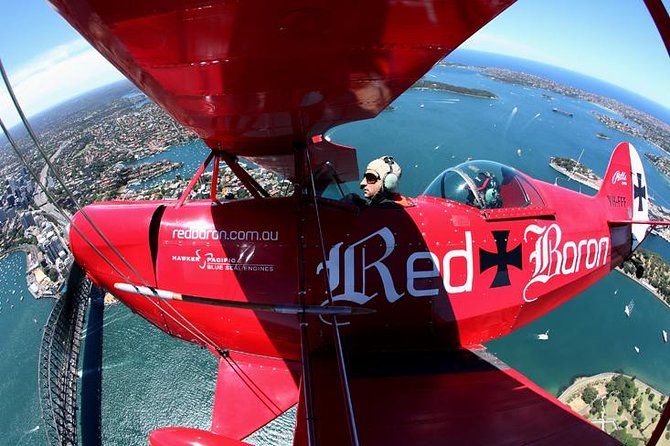
Your stomach drops before you ever take off. This is one of those rare Sydney experiences where the sky turns into a playground, flown in an open-canopy Pitts Special and paced like a competition run. You get the thrill of real aerobatics over the city, with the pilot guiding the whole ride from start to finish.
I really like that the instruction is built in, not tacked on at the end. The pilot gives you a two-way headset and talks you through what is coming next, so you are not just white-knuckling through random turns.
One possible drawback is how intense it feels in your body. You will experience real g-forces, and the sequence can include upside-down flying and multiple rolls, so if motion makes you queasy, this is a hard pass.
Key things that make this flight worth it
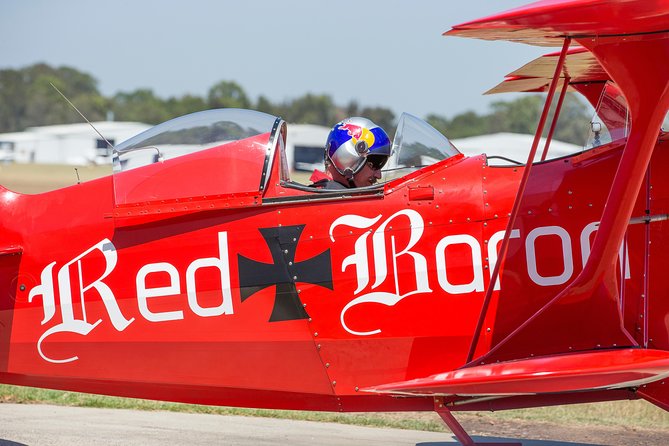
- Open-canopy Pitts Special feel: You get a close, raw connection to the airflow and the maneuver changes.
- Two-way pilot communication: You can ask questions and follow along as the run builds.
- Competition-style aerobatics: Loops, rolls, wingovers, hammerhead turns, and named combinations.
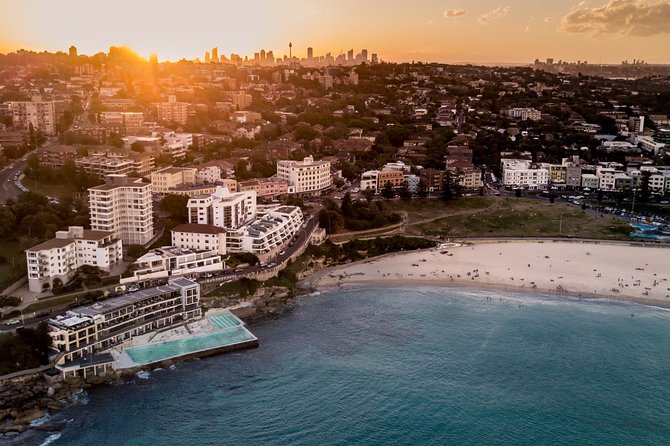
- Sydney views with purpose: You see the coast and the city, then the Great Dividing Range as you climb.
- Short but packed duration: About 30 minutes in the air, designed as one continuous thrill sequence.
- One booking size limit: The experience is capped at 1 traveler for each run.
Why the Open Canopy Red Baron Pitts Special is such a different kind of Sydney thrill
Sydney from the ground is great. Sydney from the sky is a different planet. What makes this flight memorable is the combination of a stunt plane and an open-canopy ride style, which makes aerobatics feel more immediate than the usual enclosed-aircraft version.
The plane is a Pitts Special type (the experience is branded as the Red Baron aircraft), known for tight, snappy control. That matters because aerobatics are all about how sharply you can change pitch, roll, and direction. In a plane like this, loops and rolls do not feel slow and floaty. They feel crisp, with quick transitions that keep you mentally engaged.
You also get a themed, competition-style approach. Your pilot does not just do random tricks. The flight is staged like a sequence, so it builds from basics into combinations and ends with a finale that ties it all together.
And yes, the goal here is fun. One key theme I take from the way people describe this kind of flight is that it turns into a huge grin moment, not just a brave endurance test.
You can also read our reviews of more tours and experiences in Sydney.

What happens before you ever feel the g-forces
The experience starts with a pre-flight flow that is designed to keep you informed and strapped in before things get loud and wild.
At Bankstown Airport, your pilot provides a safety orientation before takeoff. You’ll also be given a flight suit and a radio headset. Those two details are more than formalities. The flight suit helps keep you comfortable and properly fitted during the maneuvers, and the headset is your channel for two-way communication throughout the flight.
That matters because aerobatics are not just physical. They are mental. Knowing what a maneuver is supposed to feel like helps you stay calm and enjoy it instead of fighting surprise.
This is also where the pilot sets expectations. You start with foundational aerobatics like barrel-roll style motion and loop-like pitch changes. Then you move into more complex patterns. This step-by-step structure is one reason the ride feels like an experience, not a stunt you endure.
Takeoff, climb, and the Sydney view that comes with the adrenaline
After orientation, you leave from Bankstown Airport. From there, the flight heads toward the Great Dividing Range, and you should expect to fly as high as about 4,000 feet (1,220 meters).
That altitude is a sweet spot for two reasons. First, it is high enough to give you that panoramic “I can really see everything” moment over Sydney and the coast. Second, it is still low enough that you can feel the aircraft respond in real time when your pilot starts shaping the sequence.
Early on, you get sights of Sydney and the coastline, then the run shifts into maneuvers. By the time you are in the most intense parts, the views are still there in the background, but your attention turns to staying oriented as the plane rotates through different axes.
If you are the type who likes photography, plan for quick bursts of attention. You can enjoy the view, then brace for the next move. Trying to “capture everything” is a trap, because the best moments are often when you stop thinking and just ride.
The first act: loops, rolls, wingovers, and hammerhead turns

The aerobatics begin with basics, and that is exactly the right way to start. Your pilot shows you foundational tricks that teach you how the plane will move before stacking them into combos.
Expect maneuvers that can include:
- barrel roll style motion (the sequence mentions barrel rolls)
- loops
- wingovers
- hammerhead turns
This is the part where you feel your sense of up and down start to get tested. The pilot explains each maneuver as you go, and that is a major plus if you want to understand what is happening instead of guessing.
Your body is also getting coached, even if you are not being explicitly trained. When the aircraft pulls into different attitudes, you will feel pressure in the seat and your harness from g-forces. The flight suit and secure harness setup help your body handle it.
Depending on how the pilot runs your specific flight, you might also go upside down and experience more varied roll styles, such as a four-point roll or a hesitation roll. The point is not just spectacle. These moves are the vocabulary of aerobatics, and once you recognize the pattern, the rest of the sequence lands harder.
The middle act: named combinations that make it feel like competitive flying
After the basics, the pilot steps up to combination maneuvers. This is where the flight shifts from single tricks into flowing sequences, and that is where the experience becomes clearly “competition-worthy.”
You can expect combinations that stitch together loops, rolls, and figure-eight style patterns. The sequence uses names such as Roll Off The Top, Split S, and Cuban Eights.
Those names matter because they hint at how pilots train these routines. In a competition environment, routines are built to demonstrate control, timing, and precision. When your pilot strings them together, you are not just experiencing random thrills. You are watching a planned set of maneuvers executed as a sequence.
It is also where two-way communication really helps. You can follow what you are about to feel, then track how the pilot transitions from one element to the next. That reduces the mental shock of abrupt changes and keeps you from bracing at the wrong times.
If you like aviation, this is the sweet spot. If you do not like aviation, it still works, because the pilot keeps it understandable. You are still getting the thrill, but you are getting context with it.
- Blue Mountains Small-Group Tour from Sydney with Scenic World,Sydney Zoo & Ferry
★ 5.0 · 3,709 reviews

The finale: a grand sequence and the dogfight-style energy
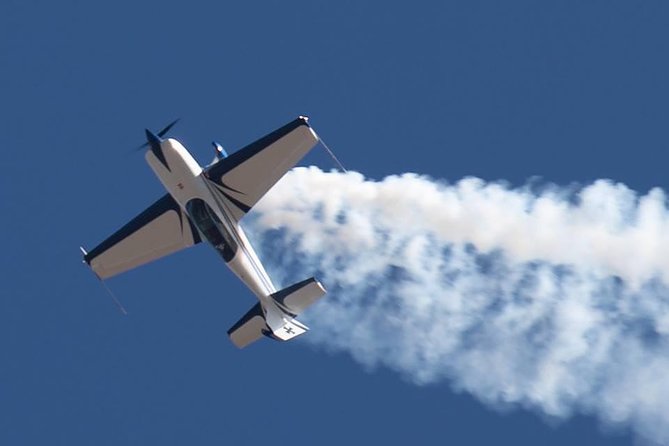
Every aerobatics flight needs a closer. This one has a finale that pulls together the elements you experienced earlier into one last sequence.
The exact arrangement can vary, but you should expect a wrap-up that feels like a proper aeronautics competition run. The description also ties the style to early fighter pilot tactics, with the aerobatic patterns used to help maneuver and avoid being shot down during attacks.
That historical context is not needed for fun, but it does change how you interpret what you are seeing. When your pilot is doing sharp rolls, tight turns, and changing direction rapidly, you understand that this is control under pressure, not just showmanship.
In the last stretch, the plane will feel the most active, and the g-forces can feel strongest. This is the moment to stop overthinking and trust that the pilot built the run in a safe, structured way. The headset is still there, so if you feel overwhelmed, you can communicate and settle back into the flow.
Handling g-forces and staying comfortable in an open-canopy aerobatics flight

Let’s be honest: aerobatics are physical. You will feel the push and pull of g-forces pressing you into your seat and harness. Even if you are fit, this is not like a roller coaster where your body stays mostly consistent. The aircraft changes direction and orientation, and your body has to adapt.
Your best strategy is simple:
- Wear the flight suit comfortably, and keep your posture steady as instructed.
- Listen to the pilot’s explanations, then anticipate the pattern instead of reacting in panic.
- Keep your breathing calm during the heavier pulls. Fast, shallow breathing can make you feel worse than the sensation itself.
Because this is an open-canopy style experience, you will also be aware of wind and airflow more than in enclosed aircraft. That is part of the charm. It is also part of the “prepare your senses” reality. If you get chilly easily, plan for that.
One more practical note: this experience has limits. You must be within a weight limit of 100 kg and height limit of 190 cm. If you are close to those numbers, check before booking so you do not waste time or get turned away on the day.
Price and value: is $499.92 for 30 minutes really worth it?
At $499.92 per person for about 30 minutes, this is not a casual add-on. But it can still represent good value because you are paying for several expensive parts at once: a stunt aircraft type, an expert pilot, and a structured aerobatics program with real-time communication equipment.
What you are buying is not just “a ride.” You are buying a guided sequence that includes multiple maneuver categories: basics first, then combinations, then a finale. You also get the flight suit and radio headset included in the experience setup, which makes the flight itself feel complete rather than improvised.
The small scale is another value point. The experience is capped at a maximum of 1 traveler, which typically means less distraction and a more focused flow for you and the pilot.
Timing also matters. On average, it is booked about 22 days in advance, which suggests you should not wait for last-minute planning if you want your preferred slot.
If you are the kind of traveler who likes memorable “signature moments,” this fits your style. If you want a long itinerary with museums and slow afternoons, this is not that. It is a concentrated hit of adrenaline and aerial control.
Logistics that matter in the real world
This is based in Sydney, and your takeoff point is Bankstown Airport. The meeting point is listed as Sydney, New South Wales, and the experience is noted as near public transportation, which helps if you do not want to rely entirely on rideshare or parking.
You’ll get a mobile ticket. That is a small thing, but it reduces stress on the day. You also receive confirmation within 48 hours of booking, subject to availability.
Also, build in a buffer mindset. One practical lesson I take from real-world experiences with high-demand activities like this is that schedules can be sensitive. I recommend planning it on a day where you can handle a delay or change without wrecking your whole trip.
Who should book this, and who should skip it
You should book this if:
- you want the most intense kind of “see Sydney from the air” that short flights can deliver
- you like understanding what you are experiencing, since the pilot explains each maneuver
- you want an aerobatics sequence that moves from basics to competition-style combinations and finale
- you are comfortable with an open-canopy ride and you do not mind strong physical sensations
You should skip or think twice if:
- you know you get motion sick or dislike being turned upside down
- you are near the size limits (100 kg weight and 190 cm height) and you are not sure you fit comfortably
- you want a gentle overview flight, because this is designed to deliver g-forces and aggressive maneuvers
If you are traveling solo, this has a good fit. The experience cap at 1 traveler makes it feel more personal, not crowded.
Final verdict: should you book the aerobatics in the open canopy Pitts Special?
If your idea of a great day includes adrenaline, controlled chaos, and a pilot who walks you through each step, this is a strong yes. The biggest selling points are the open-canopy feel and the way the pilot uses the headset to keep you in the loop while the plane performs loops, rolls, and competition-style combinations.
If you dislike intense physical sensations, this will likely feel like too much. But if you can handle g-forces and you want a real aerobatics highlight in Sydney, this is the kind of once-in-a-lifetime flight that ends with a grin you cannot hide.
FAQ
How long is the aerobatic flight?
The flight duration is approximately 30 minutes.
Where does the flight depart from?
It departs from Bankstown Airport.
How high do you fly?
You can expect to fly as high as 4,000 feet (1,220 meters).
What aircraft is used?
The experience is described as an open canopy Red Baron Pitts Special stunt plane.
Do you get safety instructions and equipment before takeoff?
Yes. Your pilot provides a safety orientation, and you receive a flight suit and a radio headset.
Can you communicate during the flight?
Yes. The headset allows for two-way communications throughout the flight.
What maneuvers should I expect?
You may experience barrel rolls, loops, wingovers, hammerhead turns, upside-down flight, and named combination maneuvers like Roll Off The Top, Split S, and Cuban Eights.
Are there height and weight limits?
Yes. The weight limit is 100 kg, and the height limit is 190 cm.
What is the cancellation policy?
Free cancellation is available. You must cancel at least 24 hours before the experience’s start time for a full refund. If you cancel less than 24 hours before, the amount paid will not be refunded.
More Tour Reviews in Sydney
- Blue Mountains Small-Group Tour from Sydney with Scenic World,Sydney Zoo & Ferry
★ 5.0 · 3,709 reviews