
REVIEW · WALKING TOURS
Sydney Hidden Gems Walking Tour
Sydney’s best stories hide in plain sight. This 150-minute Fit City Tours walk strings together Customs House beginnings, historic streets, and photo-worthy moments like the Forgotten Songs birdcage installation at Angel Place. I like how guides such as Doug and Leigh turn architecture and street art into something you can picture, not just facts you forget, and I like that the route mixes major sights with small side streets you would miss on your own.
The only drawback is the pace: it’s a casual 2.5 hour walk rain or shine, so you’ll want comfortable shoes and a rain layer ready, even on a nice forecast day.
Key highlights to look forward to
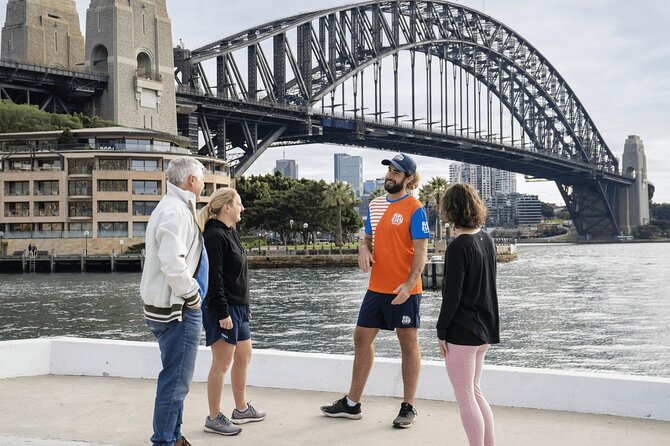
- Small group (up to 10) means you can ask questions and actually hear the guide.
- All photos included so you can focus on looking up, not fiddling with your camera.
- Angel Place’s Forgotten Songs birdcages are a quiet, emotional art stop that works in daylight or at night.
- A mid-tour coffee break at a tucked-away café gives your legs a real reset.
- Heritage to shopping in one loop from Circular Quay through QVB, then finishing by Darling Harbour and Chinatown.
Customs House to Loftus Lane: starting with Sydney’s maritime edge
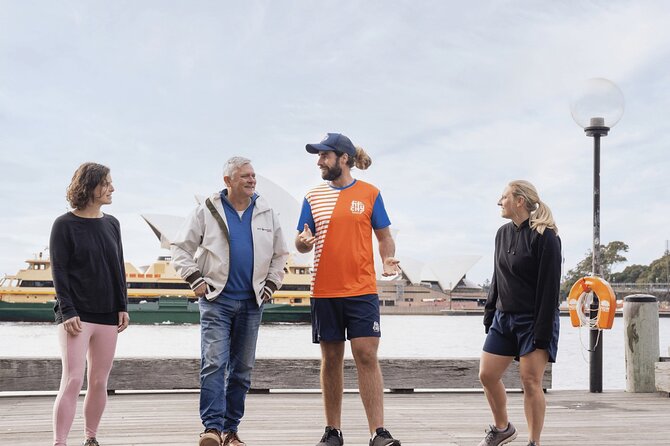
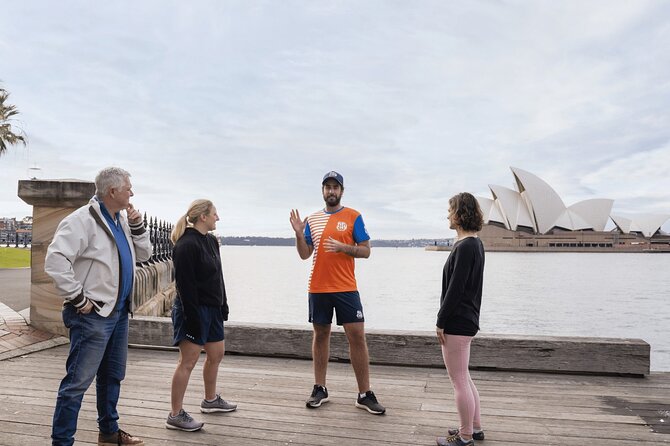
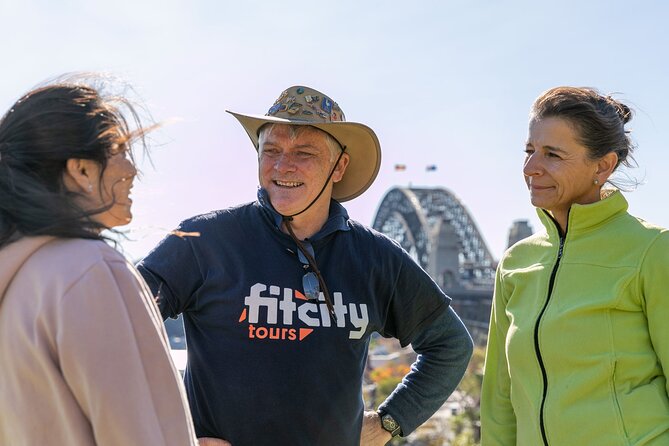
You begin at Customs House outside the front at Circular Quay. It’s a smart start point because it puts you right where Sydney’s trading history meets the city’s modern flow. Your guide will be wearing either an orange or navy Fit City Tours t-shirt and navy cap, which makes it easy to spot the group quickly.
From there, you walk onto Loftus Lane, where restored sandstone facades and older colonial textures sit close to views of the harbour. The point of this stretch is orientation. You learn how this part of Sydney grew from early settlement and convict-era maritime roles into a global city, and you get a feel for the city’s layout before the route jumps into the more “under-the-radar” streets.
Tip: keep your camera handy here, but also take five seconds to just look up. Old sandstone details and lane proportions are the kind of things you won’t notice at full walking speed.
You can also read our reviews of more walking tours in Sydney
Bridge Street and old administration streets: the city gets political
Next comes Bridge Street, lined with stately buildings and that classic Sydney blend of stone, paperwork, and public life. Even if you think you know this area, the guide’s job is to show you the stories written into the architecture, especially the layers tied to Sydney’s earliest administration.
This portion works well because it’s still central. You’re not going far out of your comfort zone, but you’re learning to read the streets like a map: where authority sits, how government space shaped movement, and why some lanes and arcades feel like they were built for more than just today’s pedestrians.
What to watch for: older facades and the way streets funnel sightlines toward important civic spaces. It’s easy to think of Sydney as harbour first, then buildings, but this stretch helps you see how the city grew from governance and commerce outward.
Angel Place and the Forgotten Songs birdcages: art you slow down for
This is the kind of stop that makes the tour feel special, because Angel Place is tucked away but hard to forget once you find it. You’ll walk into a laneway with suspended birdcages as part of an installation called Forgotten Songs.
The story behind it matters. It commemorates native bird species that once filled Sydney with song, before the city’s development changed the natural world around it. By day it’s visually striking. By night it’s hauntingly lit. Either way, this is a good place to pause and do what most tourists skip: stand still long enough to take it in.
Practical note: if it’s rainy, the ground can get slick. Watch your step, then look up. The whole effect is above you.
Martin Place to a quiet coffee break: learn while you rest
After Angel Place, the route heads through Martin Place, known for imposing sandstone facades, war memorials, and the big-street atmosphere you expect in a financial and ceremonial heart of Sydney. This stop gives you context for how central Sydney functions as a stage for ceremonies, protests, and even film shoots.
Then comes one of my favourite parts of this style of tour: the mid-tour coffee break at a tucked-away café. It’s not just a perk. It’s a strategy. After you’ve spent 60 to 90 minutes taking in buildings and street-level detail, a coffee reset helps you stay present for the final leg.
This break is included, and you’ll get options like coffee or an alternative (based on what the café can offer). You’ll also have time to ask your guide questions, including what to do next in Sydney after the walk ends.
Tip: if you’re travelling solo or you want to understand where to go for your next meal, use the café stop to ask for a couple of local, easy wins. You’ll get better advice than from guessing on a map.
Hyde Park and St James Church: oldest park, oldest surviving church
Now you shift gears. You head toward Hyde Park, described as Australia’s oldest public park. The reason this works on a walking tour is simple: it cools down the experience. You go from built-up streets to leafy avenues and historic monuments, which helps your brain file the earlier blocks of architecture and administration into something bigger: civic planning and public space.
Just nearby is St James Church, noted as the oldest surviving church building in Sydney. The guide highlights its Georgian design and the role of Francis Greenway, the convict architect behind its design. This is a powerful contrast stop: solemn architecture, civic streets nearby, and the sense that Sydney keeps layers rather than replacing them.
If you’re the type who likes photos, you’ll probably take a few here. If you’re the type who doesn’t, you should still spend a minute looking at proportions, not just grabbing a shot. Georgian symmetry and stone textures are the kind of detail you can actually appreciate while walking slowly.
- Blue Mountains Small-Group Tour from Sydney with Scenic World,Sydney Zoo & Ferry
★ 5.0 · 3,709 reviews


Queen Victoria Building to Chinatown and Darling Harbour: finish with options
The final stretch is where the tour connects history with today’s “let’s spend a few hours here” energy. You’ll explore the Queen Victoria Building (QVB), famous for 19th-century design touches like sweeping staircases and stained glass.
This is a good capstone because QVB isn’t just a pretty interior. It reflects how Sydney built indoor public space for shopping, movement, and status. After earlier stops focused on governance, maritime beginnings, and wartime memory, QVB adds another layer: commerce as culture.
Then the tour ends in the lively surrounds of Darling Harbour and Chinatown. You’re not left in the middle of nowhere. You finish with food and multicultural Sydney energy, which makes it easy to keep going without a commute.
Smart move: plan a flexible follow-on. If you feel like lingering, you’re close to plenty to eat and browse. If you’re tired, you can still find somewhere nearby to sit and recharge.
Price and logistics: what you pay for (and what you don’t)
At $68 per person for about 150 minutes, this is priced like a small-group, guide-led walking experience in the middle of Sydney’s core. Here’s what you’re actually getting for the money:
- A live guide leading you through multiple precincts, with stories that tie streets to Sydney’s development.
- All photos taken during the tour, which matters more than it sounds. It reduces the chance you’ll miss key views because you’re busy taking pictures.
- A mid-tour coffee (or alternative), so you’re not scrambling for a caffeine stop halfway through.
What you don’t get is also clear. Hotel pickup and drop-off aren’t included. Drinks and food beyond that coffee break aren’t included either. That’s normal for a walking tour, but it means you should budget a little for anything you want after you finish around Darling Harbour and Chinatown.
Logistics basics that help: it’s a casual walk, limited to 10 participants, and the route includes toilets and water taps along the course. That makes a big difference for comfort when you’re out for a solid chunk of time.
Who this walking tour suits best
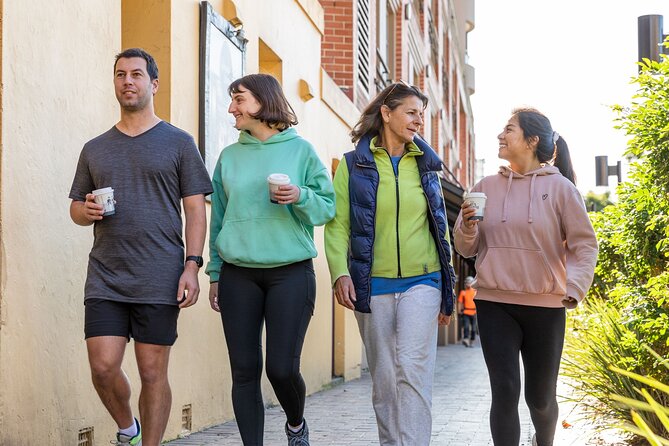
This walk fits best if you like a few specific things:
- You want Sydney context without having to read a guidebook for every street.
- You like old streets and side lanes as much as big landmarks.
- You appreciate a guide who can answer questions while you’re moving.
It’s also a strong choice for first-time visitors who want an efficient “how Sydney works” overview. And it works for locals who think they know the city, because the route leans into smaller streets, historic churches, and lane art, not just the standard postcard circuit.
If you hate walking in the rain, you can still go, but you should come prepared. The tour runs in rain or shine and only cancels for thunderstorms, so layers and traction matter.
What to bring so the 2.5 hours feel easy
Keep it simple. This is a practical walk.
- Comfortable shoes (non-negotiable for lanes and stairs).
- Camera (or phone with enough storage, since photos are part of the experience).
- Comfortable clothes, plus a rain layer if the weather is uncertain.
Also, since the route includes toilets and water taps, you don’t need to carry everything like a hike. Still, bring your basics, and plan to walk at a steady pace with your group.
Should you book this Sydney harbour-side walking tour?
I’d book it if you want a guided way to see Sydney’s layers without feeling trapped in a bus tour schedule. The best reason is the combination: Circular Quay history, lane-level art like Forgotten Songs, civic landmarks such as Martin Place, then greenery at Hyde Park, capped off by QVB and an easy finish near Darling Harbour and Chinatown.
Pass if you want a short sightseeing hit with minimal walking. This is designed to be a comfortable, casual stroll for about 2.5 hours, so you’ll want to enjoy getting from stop to stop.
If your goal is to leave with sharper city instincts, better photo moments, and a few names and stories you can actually use next day, this is a solid fit.
FAQ
How long is the Sydney walking tour?
It runs for about 150 minutes, or roughly 2.5 hours.
Where do I meet the guide?
Meet outside the front of Customs House at Circular Quay. The guide wears an orange or navy t-shirt with Fit City Tours on the front, and a navy cap.
Is the tour wheelchair accessible?
Yes, the tour is listed as wheelchair accessible.
Does it run in rain?
Yes, the tour operates in rain or shine, and it only cancels for thunderstorms.
What is included in the price?
The tour includes a live guide, all photos taken during the tour, and a mid-tour coffee (or alternative). Extra drinks and food are not included.
What should I bring?
Bring comfortable shoes, a camera, and comfortable clothes.
How big is the group?
The tour is limited to a small group of up to 10 participants.
Where does the tour end?
It finishes in the Darling Harbour and Chinatown area, where you can continue your sightseeing and meals.
More Walking Tours in Sydney

More Tours in Sydney
- Blue Mountains Small-Group Tour from Sydney with Scenic World,Sydney Zoo & Ferry
★ 5.0 · 3,709 reviews
More Tour Reviews in Sydney
- Blue Mountains Small-Group Tour from Sydney with Scenic World,Sydney Zoo & Ferry
★ 5.0 · 3,709 reviews
Not for you? Here's more nearby things to do in Sydney we have reviewed






More Walking Tours
 ★ 4.5Sydney Opera House Official Guided Walking TourFrom $343,770 reviews
 ★ 4.8From Sydney: Blue Mountains Tour with Waterfall Walk & LunchFrom $852,400 reviews
 ★ 5.0Sydney The Rocks Guided Walking TourFrom $321,546 reviews
 ★ 4.7The Rocks 90-Minute History Walking TourFrom $321,092 reviews
 ★ 5.0Blue Mountains Small Group Tour with Waterfall Walk & Fresh LunchFrom $86628 reviews
 ★ 4.9Sydney Cricket Ground (SCG) and Museum Walking TourFrom $23616 reviews
 ★ 5.0Behind The Scenes: Sydney Cricket Ground (SCG) Guided Walking TourFrom $25581 reviews
 ★ 5.0Ultimate Sydney Walking Tour (Small-Group, Drink Included)From $57514 reviews
Explore related Sydney days