
REVIEW · WALKING TOURS
Sydney Queer Walking Tour
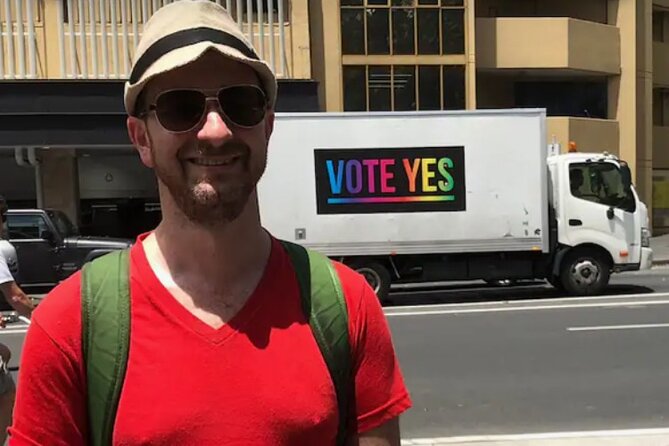
Sydney keeps secrets, and this walk reveals them. The Sydney Queer Walking Tour ties street corners to real stories of queer life, from early colonial times through reform, Mardi Gras, and the HIV epidemic era, all in about two hours. You also get a guide-led route that is designed for conversation, not museum reading.
I love that it connects queer history to specific, visible places you can actually find in daylight, like the Archibald Memorial Fountain and the Kinselas Hotel area. I also like the small group feel, with a maximum of 12 people, which makes it easier to ask questions and stay engaged. On top of that, the pacing is built around short stops, with a coffee or tea pause in Darlinghurst.
One consideration: this is a story-heavy route covering discrimination and the HIV crisis, so expect emotional subject matter even if the walk itself moves at a relaxed pace.
Key points you should know before you go
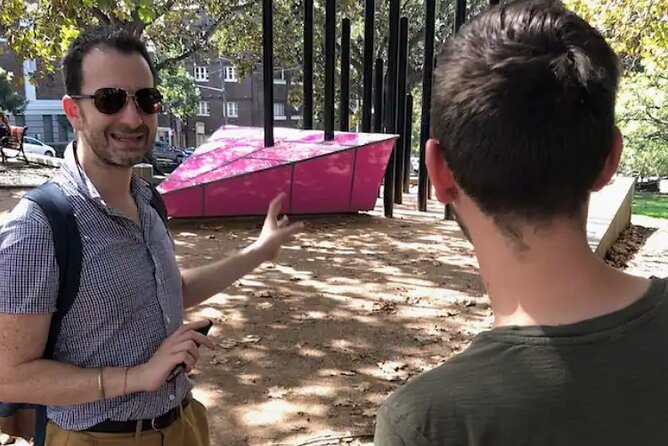
- Four stops, two hours, tight and readable pacing that keeps the story moving without rushing.
- Small groups (max 12), so you are not lost in a crowd.
- Mardi Gras in 1978 is grounded in place, with the first event discussed at Taylor Square.
- Darlinghurst backstreets + a coffee or tea stop, for an easier, more human feel.
- A guide who can hold your attention, with Michael called out for making the tour engaging.
A Sydney queer walk that stays readable, not academic
This tour works because it does what good walking tours should do: it turns abstract history into things you can point at. You get a sequence of stops that build on each other, so you start with earlier traces, then move toward the 1970s push for fairness, and finally land in the mainstream moment of Mardi Gras.
You will also appreciate that the tour is not framed as one straight timeline. It shifts focus from queer lives and community culture to policy and protest, including the role media played in the 1970s. That context matters, because queer history is often scattered, hidden, or missing from everyday signage.
And yes, it is set up to be sociable. The route is mostly about walking and listening, with just enough pauses to keep it comfortable.
You can also read our reviews of more walking tours in Sydney


Starting at Law Courts Library, then letting Archibald Memorial Fountain set the tone
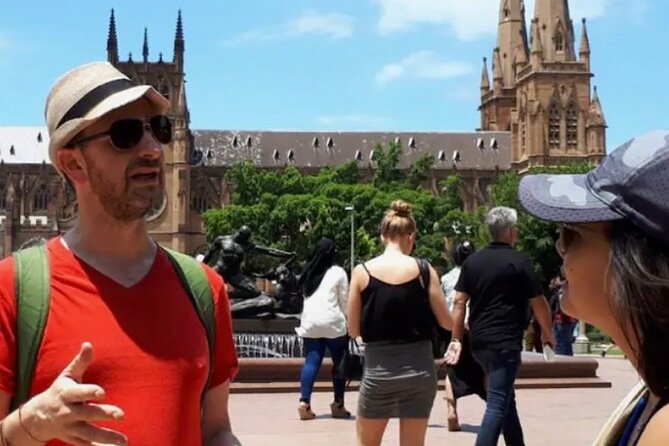
You meet at Law Courts Library, 184 Phillip St and you start the walk at 9:30 am. From the jump, the tour’s first stop is about interpretation: Archibald Memorial Fountain is used as a symbol for hidden queer histories, from colonial times right into the 1970s.
This is a smart opening because it trains your eye before you ever get to the bigger headline moments. Instead of starting at the most famous sites, you begin with the idea that some parts of the story were not easy to say out loud. That frames what comes next, especially when the tour shifts into how communities persisted through changing laws and social pressure.
What I like about this opening is that it invites you to think like a local historian for a couple hours. You are not just learning facts, you are learning how to read the city.
Whitlam Square and the Emden Gun: the 1970s push for equality
After about half an hour of walking, you reach Whitlam Square, and the tour focuses on the Emden Gun. This stop is where the story leans into the 1970s gay rights era and the demand for fairness and equality.
The tour also touches on a practical modern point, the role media played. That matters because media is not just entertainment, it shapes what feels acceptable, what gets attention, and what gets pushed back. In other words, you see how public visibility can be both protective and dangerous, depending on the moment.
This stop is useful for you if you like understanding cause-and-effect. It is not just, things happened. It is, people made claims, media amplified them, and the wider community had to respond.
Darlinghurst backstreets to Green Park, plus a coffee or tea break
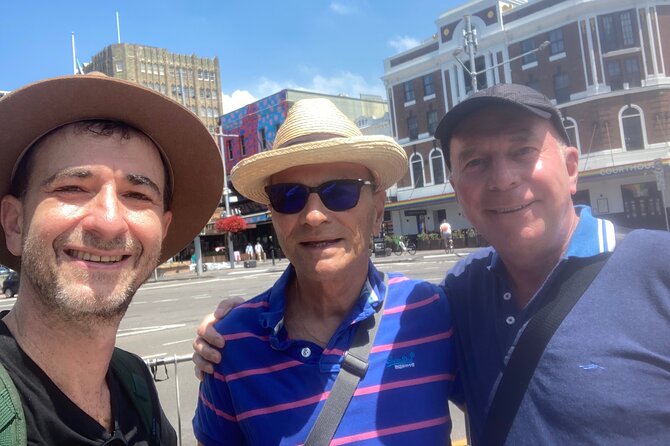
Next you head through backstreets toward Green Park in Darlinghurst. This stretch is not just a geographic shift. It is where the tour slows slightly into lived experience, including how Sydney handled the HIV epidemic and how the community coped and organized through those years.
You also get a coffee or tea stop option along the way at a local café. Even if you do not stay for long, the point is the rhythm. A history walk can turn into nonstop standing and talking. This break keeps you alert for the final push to Mardi Gras.
One practical benefit of this middle stop: it gives you time to mentally reset. By now you have moved from hidden early traces to the more public 1970s struggle, and then into crisis-era context. The coffee pause helps you absorb that without feeling like you are sprinting through heavy material.
Taylor Square and Kinselas Hotel: grounding the first Mardi Gras in June 1978
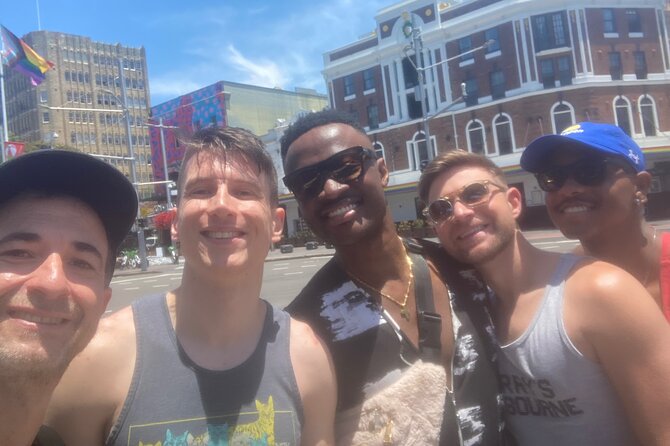
The last stop is at Taylors Square, with discussion focused on June 1978 at the first Mardi Gras at that spot. The tour connects the moment to why it still matters for queer Sydney today, which is a big theme: community events can be both celebration and protest.
This is the point where you may feel the tour’s logic click into place. Earlier stops teach you that queer history can be hard to find. The 1978 Mardi Gras stop teaches you that when community chooses visibility, it creates landmarks that future generations keep returning to.
You also hear about the subsequent decades, including protest, partying, and how the HIV epidemic shaped public life. That combination is important. Mardi Gras is often treated as one thing, but the tour frames it as part of a wider social shift that included activism and survival.
If you want one takeaway from the whole route, this is it: place matters. When the story is told at the actual street corner, it stops feeling like a distant chapter.
- Blue Mountains Small-Group Tour from Sydney with Scenic World,Sydney Zoo & Ferry
★ 5.0 · 3,709 reviews




What you learn beyond the headlines: Indigenous viewpoints, colonial traces, and reform waves
The tour description highlights that you will learn about queer histories in multiple eras, including indigenous Australia’s view on diverse sexual orientation and gender and what is known about queer forebears during the colonial period into the early 20th century.
You should think of this as a reminder that queer history does not begin when mainstream newspapers decide to notice it. It includes knowledge that can be hard to locate and easy to overlook. Starting with those earlier layers makes the later 1970s reforms feel less sudden, more like the result of long pressure and long persistence.
Then the narrative moves into social upheaval reforms that burst into mainstream life from the 1970s onwards. The first Mardi Gras in 1978 becomes a focal event, followed by decades of protest and cultural life. The HIV epidemic also stays in the picture, which keeps the tour grounded in real consequences, not just costumes and slogans.
For you, this makes the tour useful even if you already know the outline of Mardi Gras history. You get the side roads that explain why those events landed with such force.
The pacing and group size that make it easy to follow
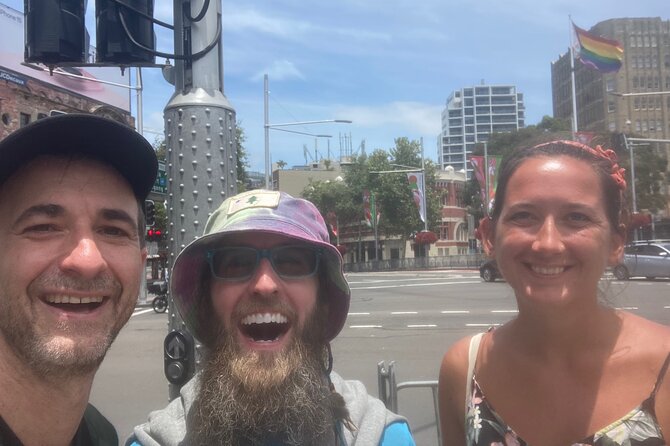
This is a 2-hour walk with four stops of about 30 minutes each. That structure works well when you want a guided story but you also want to keep your day flexible afterward.
The maximum of 12 travelers is a quiet superpower here. In a smaller group, guides can tailor explanations, and you are less likely to lose parts of the story while trying to hear over other people’s questions. It also helps the emotional topics land without turning into a one-size-fits-all lecture.
For practical comfort, the tour is said to be near public transportation, so you can slot it into a bigger Sydney day without heavy planning.
Price and value: $53.79 for two hours of guided queer storytelling
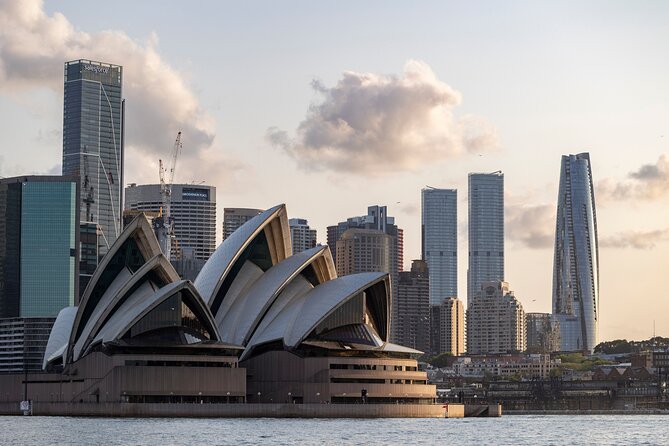
At $53.79 per person, this tour is not a budget throwaway. But I think the value is in what you get for the time: a compact route that covers multiple eras, with four meaningful stops and a guide-led narrative meant for walk-and-talk attention.
You are also getting something many history tours do not deliver as well, a clear sense of why each location matters. The route is built around touchpoints like Archibald Memorial Fountain, Emden Gun at Whitlam Square, and Kinselas Hotel near Taylor Square. That means your learning is tied to places you can revisit later on your own.
If you like history that feels human and specific, the price becomes easier to justify. If you only want a quick overview of Mardi Gras and nothing else, you might find it more than you asked for. But if you want the context around reforms and the crisis years, the cost lines up with the effort.
Getting the most out of your 9:30 am start
The tour starts at 9:30 am and runs for about two hours, finishing at Sydney Sustainable Markets, Taylor Square, Oxford Street at the intersection with Bourke Street. That end point is convenient because it is a lively area where you can keep exploring after the walk.
I suggest showing up a little early so you are not rushing while the guide is setting the scene. With a story-driven route, being mentally ready helps. Also, since there is a coffee or tea stop option, it is smart to think about whether you want it early or mid-route so you do not miss your window.
Comfort-wise, wear shoes that handle sidewalk walking. Nothing about the tour suggests extreme terrain, but it is still a walking itinerary.
Who this tour suits best, and who might want a different style
This tour is a great fit if you want LGBTQ history connected to real streets in Sydney, especially if you are interested in how the 1970s reforms and Mardi Gras 1978 shaped public life. It also works well if you care about understanding cultural scene context, not just dates.
You may also like the way it includes earlier chapters, including colonial-era queer forebears and indigenous perspectives on diverse sexual orientation and gender. That broader scope makes it more than a one-event tour.
Who might not love it? If you prefer history told with lots of museum artifacts and long independent reading time, a walking tour might feel too conversational. Also, if emotional topics are hard for you, you may want to mentally prepare for discussion of discrimination and the HIV epidemic era.
Should you book the Sydney Queer Walking Tour?
Book it if you want a guided Sydney queer history experience that uses actual locations, keeps the pace manageable, and connects major moments like the first Mardi Gras in June 1978 to the wider social changes around it. I especially think it is worth it if you like learning with a guide, and you enjoy a route where each stop adds context rather than repeating the same points.
Skip it only if you are mainly looking for a casual photo walk or you do not want any heavy subject matter. Otherwise, with small group size, a two-hour runtime, and a guide called out as engaging, it is a solid way to see Sydney with your eyes open.
FAQ
How much does the Sydney Queer Walking Tour cost?
It costs $53.79 per person.
How long is the tour?
The tour lasts about 2 hours.
Where do I meet the tour?
You meet at Law Courts Library, 184 Phillip St, Sydney NSW 2000.
Where does the tour end?
The tour ends at Sydney Sustainable Markets at Taylor Square, Oxford Street at the intersection with Bourke Street, Darlinghurst NSW 2010.
Is there a mobile ticket?
Yes, the tour includes a mobile ticket.
How many people are in a group?
The tour has a maximum of 12 travelers.
Are service animals allowed?
Yes, service animals are allowed.
What is the cancellation policy?
Free cancellation is available. You can cancel up to 24 hours in advance for a full refund. If you cancel less than 24 hours before the start time, the amount paid will not be refunded.
More Walking Tours in Sydney

More Tours in Sydney
- Blue Mountains Small-Group Tour from Sydney with Scenic World,Sydney Zoo & Ferry
★ 5.0 · 3,709 reviews
More Tour Reviews in Sydney
- Blue Mountains Small-Group Tour from Sydney with Scenic World,Sydney Zoo & Ferry
★ 5.0 · 3,709 reviews
Not for you? Here's more nearby things to do in Sydney we have reviewed








More Walking Tours
 ★ 4.5Sydney Opera House Official Guided Walking TourFrom $343,770 reviews
 ★ 4.8From Sydney: Blue Mountains Tour with Waterfall Walk & LunchFrom $852,400 reviews
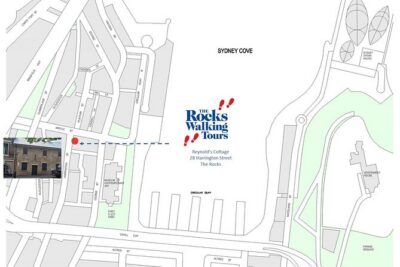 ★ 5.0Sydney The Rocks Guided Walking TourFrom $321,546 reviews
 ★ 4.7The Rocks 90-Minute History Walking TourFrom $321,092 reviews
 ★ 5.0Blue Mountains Small Group Tour with Waterfall Walk & Fresh LunchFrom $86628 reviews
 ★ 4.9Sydney Cricket Ground (SCG) and Museum Walking TourFrom $23616 reviews
 ★ 5.0Behind The Scenes: Sydney Cricket Ground (SCG) Guided Walking TourFrom $25581 reviews
 ★ 5.0Ultimate Sydney Walking Tour (Small-Group, Drink Included)From $57514 reviews
Explore related Sydney days