REVIEW · SYDNEY
Western Sydney: Junior Tree Ropes Courses
Treetop fun for tiny adventurers is here. The Western Sydney Junior Tree Ropes Courses are a kid-sized introduction to swinging, balancing, and climbing in Western Sydney Parklands, built for ages 3 to 7. What I really like is the continuous safety systems that help make a first experience feel more controlled, and the fact you do it as a small-group activity with friendly instructors guiding from the ground.
Here’s the main thing to plan for: the youngest kids may not get the full menu of stages. One parent noted that for 3 and 4-year-olds, only a couple of stages felt truly suited, so you will want to match expectations to your child’s comfort level.
Key things to know before you go
- Kids 3 to 7 get their own lower-height courses, not the bigger-courses setup
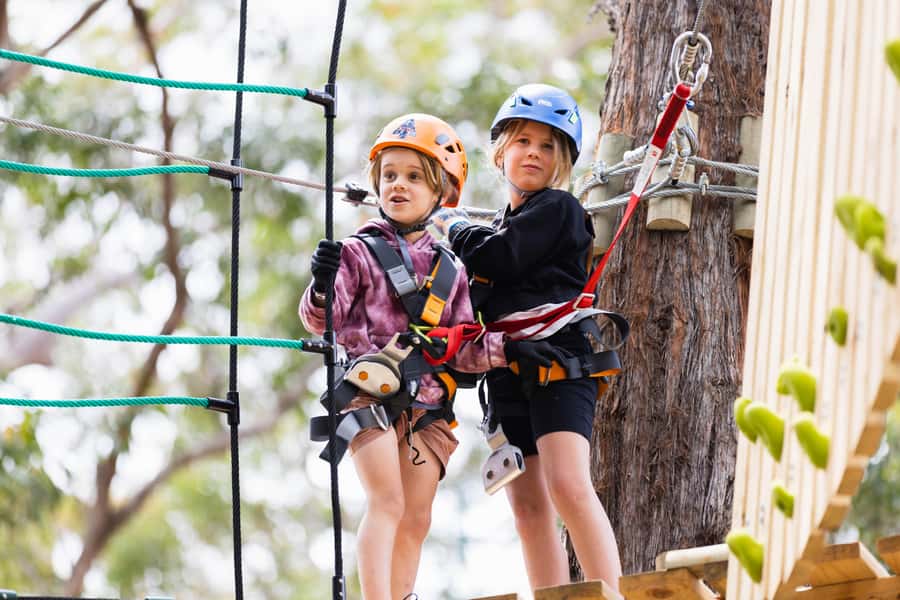
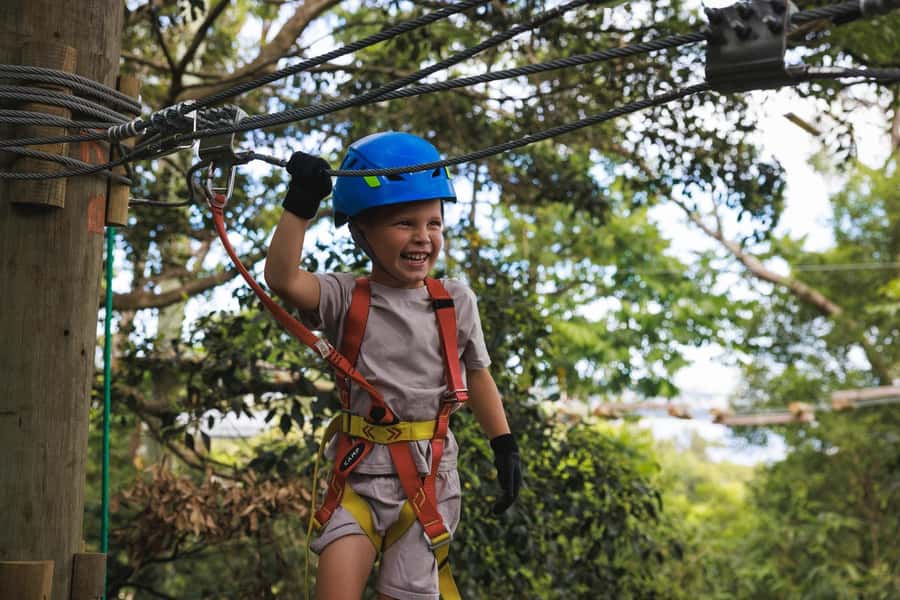
- Four Junior Tree Ropes Courses include challenges like wobbly bridges, swinging logs, and mini ziplines
- Continuous safety systems help kids stay connected while they move through the obstacles
- Adults supervise from the ground, so you are close for encouragement and safety checks
- Small group limit of 10 keeps attention focused during the 150 minutes
- Arrive 15 minutes early so your child can settle in for the safety briefing
Why Western Sydney Parklands is such a great place to start
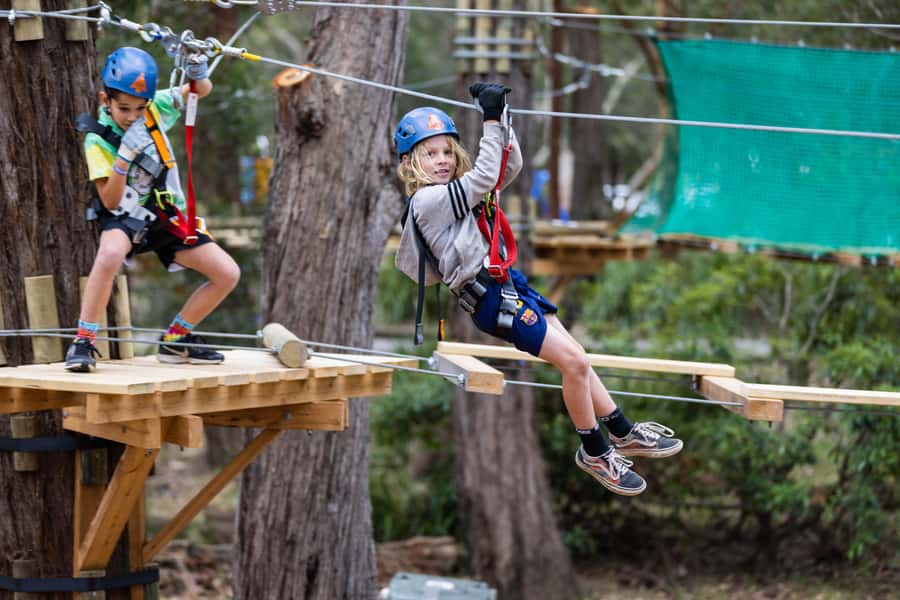
Western Sydney Parklands is the kind of setting that makes this activity feel more like an outing and less like a strict lesson. You get fresh air, greenery, and open space around the treetop structures, so the whole experience feels relaxed for families.
The best part, for me, is that the location supports the mission of the junior courses: confidence-building. When kids can look down, see you, and feel like the environment is calm, they usually engage better. And if you are lucky, you may spot kookaburras while you wait and watch.
Also, this is designed to be beginner-friendly. Instead of throwing little kids into a high, scary maze, the courses are made for little explorers. Lower heights and age-appropriate obstacles matter a lot when you are introducing fear of heights to a new mind.
You can also read our reviews of more tours and experiences in Sydney.


What 150 minutes looks like with ages 3 to 7
The session runs for 150 minutes, which is long enough for kids to warm up, get comfortable with the safety gear, and actually complete multiple challenges. You will not feel rushed in a typical way, but you still want to show up prepared.
Plan your time around three phases:
First, you check in at Treetops Adventure reception. The practical win here is that the team can start the safety process early, before your child is bouncing around with anticipation.
Second, you get a safety briefing. The instruction is clear: arrive 15 minutes before your booked time. That extra time helps because the briefing is not just rules. It is the moment where your child learns what they should do, how to move safely, and what to expect once they are in the trees.
Third, kids work through the four Junior Tree Ropes Courses at a pace that suits their comfort. Since the group is limited to 10 participants, you are less likely to feel like you are waiting ages to get started or that the staff are spread too thin.
Adults supervise from the ground, which changes the vibe from a hands-on coaching moment to a support-and-encouragement role. You can cheer, explain calmly, and watch the “connected safety” setup while your child tackles the next obstacle.
Inside the four Junior Tree Ropes Courses: bridges, logs, and mini ziplines
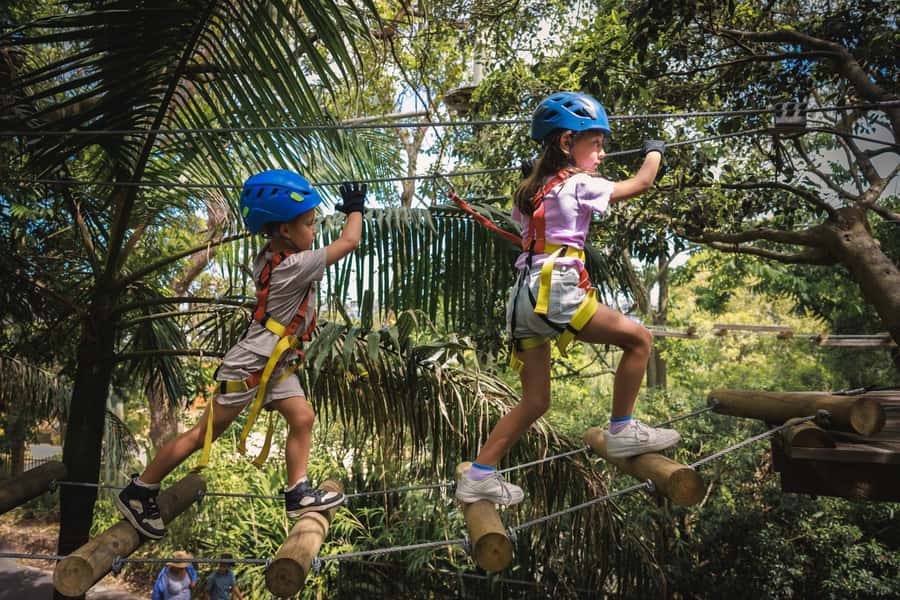
These are not random obstacles tossed together. They are specially designed junior courses built for small bodies, small attention spans, and the kind of bravery that shows up in spurts.
Across the courses, you will see fun, varied elements such as:
- Wobbly bridges that test balance without requiring speed
- Swinging logs that add movement, helping kids feel the rhythm of safe motion
- Mini ziplines that let them experience the thrill of gliding without sending them too far
The key phrase for parents is right height. The courses are designed so kids can reach the next section and keep going with less frustration. When kids struggle, it is often because they feel too small for the structure. Here, the structures are built with younger adventurers in mind.
What that means for you on the day:
- If your child is cautious, they can still participate through the course height and obstacle style that matches their age range.
- If your child is excited, they still have manageable steps. You get the satisfaction of seeing real progress instead of a fast fade-out.
One practical note from experience at places like this is that fear often shows up as hesitation. If your 3 or 4-year-old hesitates at the first wobbly section, that does not mean they are done. It can simply mean they need one more moment to understand how the safety setup works and how you are watching them from below.
Safety that parents can actually relax with, and the one thing you must do
The standout safety concept is the continuous safety systems built into these junior courses. That is the difference between a scary “try your luck” setup and an assisted adventure where kids are kept connected while they move.
What is included also matters:
- Safety equipment and briefing
- Friendly instructors
So, you are not just dropping your child into the trees and hoping for the best. There is a process, and there are staff guiding the safety side.
Still, you have real responsibilities as the adult supervisor. Here are the rules that affect your day directly:
- Children must be accompanied by an adult.
- You arrive early for the briefing so your child is not starting the course half-frazzled.
- Your child is in closed-toe shoes and comfortable clothing, which reduces the chance of fussing or slipping.
Also, know the “not for” list before you drive out. This experience is not suitable for children under 3, pregnant women, and people with mobility impairments. If any of those apply, it is worth choosing a different session type through the provider instead of forcing it.
What to wear and pack for a comfy treetop session
This activity is physical, outdoors, and in trees. The goal is simple: wear what lets your child move easily and safely.
Bring:
- Comfortable shoes (closed-toe matters)
- A sun hat
- Sunscreen
- Water
- Insect repellent
Wear:
- Comfortable clothing that does not restrict movement.
This is the sort of family activity where the smallest comfort issue can become a big mood issue. Tight shoes, sweaty heat, or forgotten water can turn a confident kid into a distracted one. If your child tends to get cranky when they are thirsty, water becomes non-negotiable here.
Also consider insect repellent as a basic picnic rule. You are in a park setting near trees, and waiting around on the ground is part of your job as the adult watcher.
- Blue Mountains Small-Group Tour from Sydney with Scenic World,Sydney Zoo & Ferry
★ 5.0 · 3,709 reviews


Price and value: how $26 stacks up for 150 minutes
At $26 per person for a 150-minute session, this is not expensive compared with typical kids’ adventure activities that include equipment and staff guidance.
Here is why the value works:
- You are paying for four courses in a purpose-built junior setup.
- Safety equipment and a briefing are included.
- Instructors are there to keep things friendly and structured.
- The small group size (up to 10 participants) can make the experience smoother, especially during setup and transitions.
The only “gotcha” cost category is what is not included. Food and drinks are not provided, and you are responsible for transportation to and from the park. If you are making it a half-day plan, I would budget for snacks and water separately so nobody gets hangry mid-session.
On the day itself, the price also feels fair because the time is not a quick photo-op. It is long enough to actually try obstacles and experience the full arc of a junior treetop adventure.
Practical booking priorities that affect your kid’s experience
I always think about kids’ activities in terms of readiness. A 150-minute session can feel amazing or it can feel overwhelming, depending on timing and expectations.
Based on the details you are given and the way kids respond at this age, here are the priorities I would follow:
- Arrive 15 minutes early for the briefing. This is not optional in practice. It prevents rushed gear and last-minute stress.
- Watch for anxiety cues early. If your child is unsure, calm reassurance works better than pushing speed.
- For 3 and 4-year-olds, expect that not every stage will feel comfortable. One parent specifically pointed out that only two stages seemed suited for that youngest bracket. Plan for participation that may look different than what an older kid can do.
- Choose the time slot that matches your child’s energy. If they usually melt down in the late afternoon, you might avoid the hottest or most tired hours.
Also, the instructor language is English, so if you need language support beyond that, plan ahead with the provider.
Who this junior ropes course is best for
This is built for the first treetop thrill, so it suits families who want a safe adventure step-up from playground climbing.
Best matches:
- Kids aged 3 to 7 who are curious about heights, obstacles, and moving through nature
- Parents who want to supervise from the ground while instructors handle the treetop safety setup
- Families looking for a small-group outdoor activity rather than a crowded attraction
It may be less ideal if:
- Your child under 3 is still trying to understand basic climbing skills and safety routines
- Your child is very resistant to anything harness-related or shaky movement. In that case, you might consider waiting a year or choosing a calmer activity first.
- Any mobility or pregnancy situation makes the course unsafe. The experience is not suitable for these groups per the provided information.
And for older kids (8+), this specific junior course is not the one to book. The provider notes that there are separate courses for 8+ and adults.
Things I’d plan for on the day (based on real-world parent lessons)
One parent said a toilet option was not close to the activity, but they also noted it was not time-restricted, so it did not become a problem during their visit. I treat that as useful planning advice, not a scare story. If you can, have your child use facilities before you arrive and keep the day simple.
Another parent highlighted a realistic age split: their 6-year-old enjoyed it, while their 3-year-old was not keen. That lines up with what I see with younger kids. At 3, some kids love adventurous games, but others freeze at the first new step. The important takeaway is to treat the first session as an experiment. If your child only does a couple of stages, that can still be a win.
If you want the best chance of a positive experience:
- Bring water even if you think you will be fine. Kids get sweaty.
- Keep clothing comfortable and shoes secure.
- Keep your voice calm during gear-up and the first obstacle.
Should you book the Western Sydney Junior Tree Ropes courses?
If you want a confidence-building treetop activity for kids 3 to 7, this is a strong yes. The combination of lower-height junior design, continuous safety systems, and included briefing plus equipment is exactly what you want for a first adventure. Add the small group size, and it feels like an activity where staff can actually keep an eye on things.
I would hesitate only if your child is extremely anxious about anything harness-related, or if the youngest age group is a mismatch for your child’s temperament. For 3 and 4-year-olds, plan around the possibility that fewer stages may feel appropriate, and keep the goal flexible: attempt, learn, and finish with confidence, not perfection.
In short, it is great value for the time and structure you get, and it is a genuinely different family outing than another playground stop.
FAQ
What age range is this junior ropes course for?
It is for children aged 3 to 7.
How long is the experience?
The duration is 150 minutes.
Where do I check in?
Check in at Treetops Adventure reception.
Is food included?
No, food and drinks are not included.
What should I bring for my child?
Bring comfortable shoes, a sun hat, sunscreen, water, and insect repellent.
Does an adult need to be present during the course?
Yes, children must be accompanied by an adult, and adults supervise from the ground.
Who is it not suitable for?
It is not suitable for children under 3 years, pregnant women, and people with mobility impairments. Smoking is also not allowed.
More Tour Reviews in Sydney
- Blue Mountains Small-Group Tour from Sydney with Scenic World,Sydney Zoo & Ferry
★ 5.0 · 3,709 reviews