
REVIEW · PORT STEPHENS TOURS
Anna Bay: Irukandji Entry Pass with Reef Shark Encounter
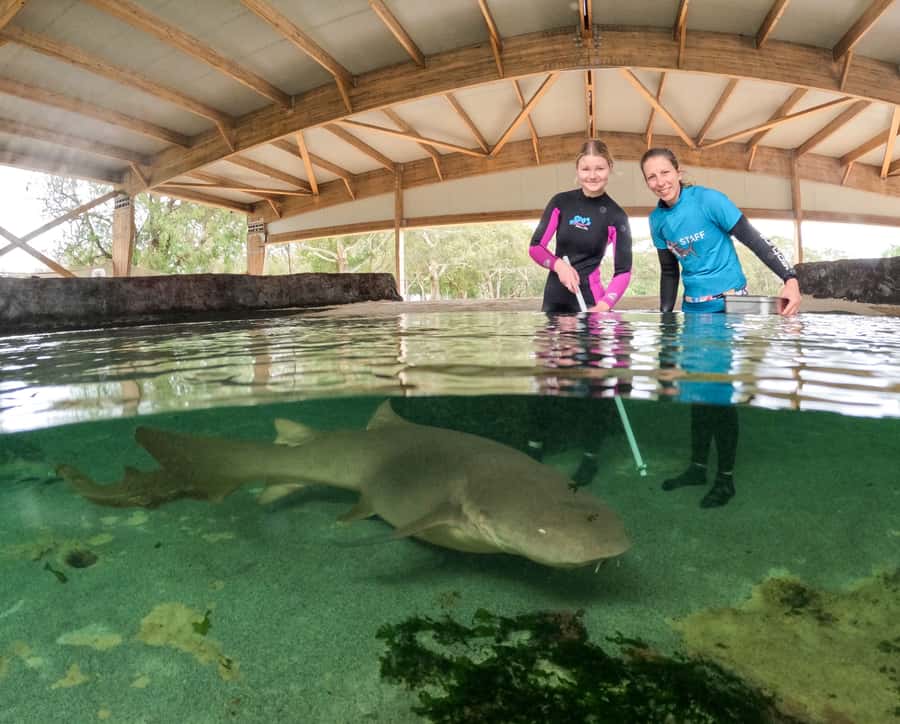
Feeding sharks feels unreal, until you are there. At Irukandji in Anna Bay, you snorkel in a tropical lagoon while guides get you feeding 3 metre tawny nurse sharks up close, plus opportunistic whitetip reef sharks.
What I like most is the hands-on nature of the encounter. You are not just looking from the shore, you are using the feeding pole and watching the sharks come right up to your mask, feet, and hands. The second big win is the way the staff teach you as you go, with safety coaching and talk-time about what the sharks and rays do and why they act the way they do.
One thing to plan for: this is an intense activity and it is not for kids under 12. Also, their rules are strict about sunscreen, so you will want to think about sun protection before you get into the lagoon.
If you want an animal experience that mixes up-close moments with actual ocean education, this is one of the stronger options around New South Wales. It is also short enough to fit into a day trip, with a clear setup and a simple aftercare routine.
Key things that make this experience stand out
- 3 metre tawny nurse sharks you feed on a specialised feeding pole, with a focused 20-minute shark session
- Snorkel mask viewing from above and below so you see how they swim in and how they grab food underwater
- Shallow-water warming up with rays and petting first, so you ease in instead of going straight to the main event
- Whitetip reef sharks join the action for that cheeky, lively feel around your legs
- Staff-led safety and behavior coaching before you enter the lagoon, plus guiding out onto the reef
- A strong educational angle on gentle shark behavior and ocean stewardship, not just a thrill
Anna Bay Check-In: Timing, Private Group Feel, and What You Do First
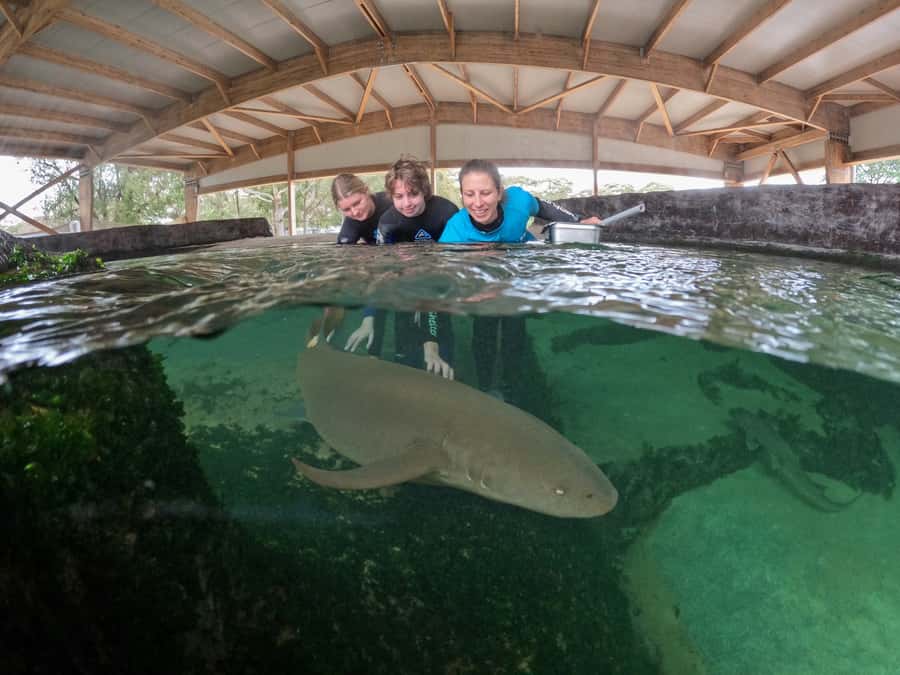
Irukandji Shark and Ray Encounters runs a 2-hour experience built around one main goal: getting you safely into the water at the right time, and then onto the reef for the shark feeding window. The setup is straightforward, but you do need to arrive prepared.
Plan to show up 20 minutes before your tawny nurse shark encounter. That time matters because you will be guided through everything from how to interact safely to getting your equipment sorted. This is especially helpful if you are a little nervous around sharks. The staff do not just hand you gear and send you in, they coach you first.
The session is described as a private group, which typically means you get a more controlled, focused experience compared with big mixed crowds. You will also have a live English-speaking guide, and the pace is built so the group is ready to enter the lagoon together.
If you are traveling as a family, this format tends to work well because the guide can steer everyone through the same key steps, without you feeling lost or rushed. And because the total time is only around two hours, it is easier to fit into a day than longer marine programs.
You can also read our reviews of more tours and experiences in Irukandji Shark Ray Encounters.
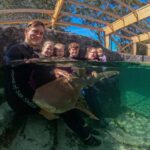
Gear and Water Rules: Wetsuit, Socks, Snorkel Mask, and Sunscreen Reality
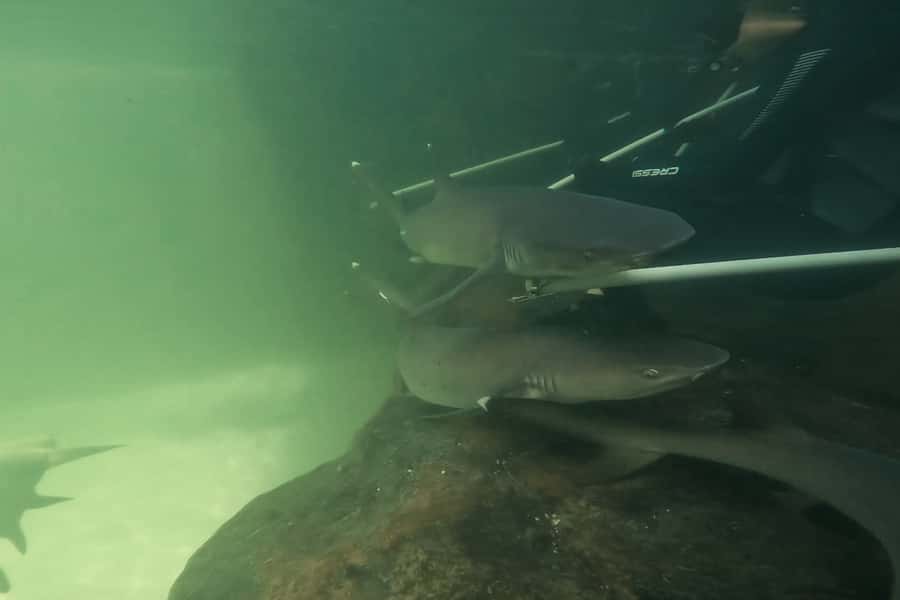
You are not expected to bring much beyond basic swim gear and sun protection. Irukandji provides the core items you need to stay comfortable in the water and to keep the interaction safe and consistent.
You will receive a wetsuit and socks to wear in the lagoon. This helps keep you warm and also sets you up with the right kind of fit for standing and moving in the shallow water. They also provide the snorkel mask, which becomes key for how you experience the encounter. It is not just surface viewing. The mask lets you look up at sharks as they swim toward you, and it also lets you see under the water when the guide guides food retrieval from the pole.
Here is the practical bit: the activity has a clear rule of what is allowed in the lagoon. Their information lists sunscreen as not allowed, even though it also lists biodegradable sunscreen as something to bring. That contradiction is your cue to be careful. I would treat the rule as the priority, and plan to avoid applying sunscreen in the water. Instead, bring what they ask for, and follow staff instructions when you check in.
Also, do not bring your own wetsuit. They note that your wetsuit could bring marine life from the ocean. That tells you they are serious about biosecurity and keeping the lagoon environment stable.
What you bring is mostly about comfort and practicality: swimwear, a towel, a sun hat, and a waterproof camera if you want to record without worrying about spray. A waterproof camera is worth it here because you will be in and out of the water and you will want usable shots, not just fuzzy guesses.
Entering the Tropical Lagoon: The Shallows Encounter With Rays First
Most shark encounters try to go straight to the thrill. This one does it in steps, which I think is smart. You start with a shallows encounter in the lagoon where you are surrounded by sharks and rays of different sizes and species. Before you reach the reef feeding phase, you get time to settle.
When you enter, you will feel the mix of movement and attention from the animals. The description emphasizes that you can end up surrounded, with sharks and rays gliding around your feet. That matters because it changes your mindset. Instead of thinking only about the biggest shark, you start noticing the whole group: who stays near the surface, who cruises along, and how the animals respond to the guide’s cues.
The guide hands out food as they talk you through different personalities, habits, and needs. That is not extra fluff. It makes the encounter feel less like random chaos and more like a guided, educational feeding session. You learn what the guide is watching for, so you can relax into the moment instead of wondering what will happen next.
You also get a chance to interact more than just watching. The included description says there is feeding and petting in the shallow encounter. Reviews back up the gentle vibe, especially the friendliness of rays. That matters because starting with rays first often helps people face the fear part without being slammed with the largest sharks immediately.
This shallow portion is also where you should pay attention to guide instructions on how to stand, how to move carefully, and how to handle your gear. If you do that well, the next step feels smoother.
The 20-Minute Reef Shark Feeding: Tawny Nurse Sharks Up Close
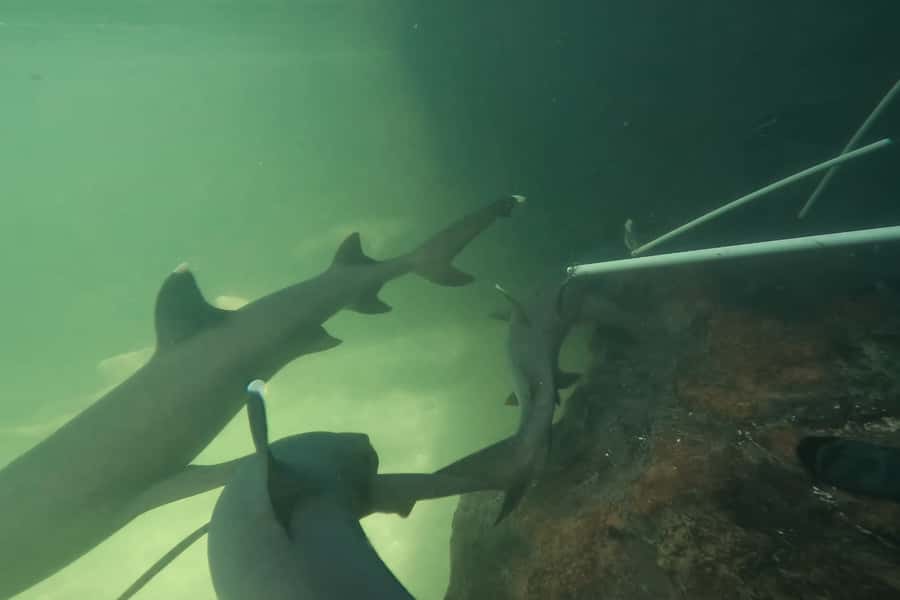
The main event is the shark feeding phase, built around a 20-minute encounter focused on the reef sharks. This is where the experience shifts from lagoon ambience to real up-close action.
You will go into the lagoon and out onto the reef so you can comfortably feed into deeper waters. That transition is important. It explains why they give you wetsuit and socks, and why they guide you step-by-step before you enter. In deeper water you still stay controlled, but the environment changes, and the guide needs everyone positioned properly for safe feeding.
The stars here are the tawny nurse sharks, described as the biggest sharks you will feed. The encounter is specifically framed as feeding 3 metre tawny nurse sharks while you stand at the edge of the reef of the tropical lagoon. That is the type of detail that makes the session feel real, not staged in a distant corner.
Feeding happens with a specialised feeding pole. You take food off that long pole, and because you have the snorkel mask, you can see the sharks approach above the surface and also see the moment food is taken from below. That combination is what turns this from a simple viewing activity into something more memorable.
This is also the point where the guides’ coaching becomes emotional as well as practical. The experience is described as helping you face your fears while interacting with elusive creatures. I would expect moments of adrenaline, especially when a large shark comes close. But the way it is structured, with 20 minutes for the focused feeding segment, gives you a clear timebox. You are in it, you do it, and then you come back out.
Whitetip Reef Sharks Join In: How the Encounter Feels Lively
If the tawny nurse sharks are the big, steady presence, the whitetip reef sharks are the lively addition. The experience description calls them cheeky, and that fits the overall feeling of animals moving around you in active ways.
The guide takes you through where and how to feed, and you end up sharing attention between shark types. The whitetips tend to feel a bit more curious in how they approach, which can make your interaction feel more playful while still being serious and controlled.
Another thing I appreciate about the design is that it is not just about one moment. You get time in the lagoon, then a dedicated feeding window on the reef. That rhythm matters for your comfort and for learning. You have a chance to understand what the guide is telling you about shark behavior, and then you see it in action when both shark types are around.
The included description highlights the affection and affectionate nature of the animals, plus how they glide around your feet or swim toward your lap looking for attention. I would not expect that every second looks the same, but the overall intent is clear: you are meant to experience them as real animals, not as distant shapes.
If you are going with someone who is nervous about sharks, the whitetip interaction can actually help. A lively approach can feel less like threat and more like curiosity, especially once you understand that the guide is in charge of feeding timing and safe positioning.
The Education Part: Safety, Facts, and Ocean Stewardship
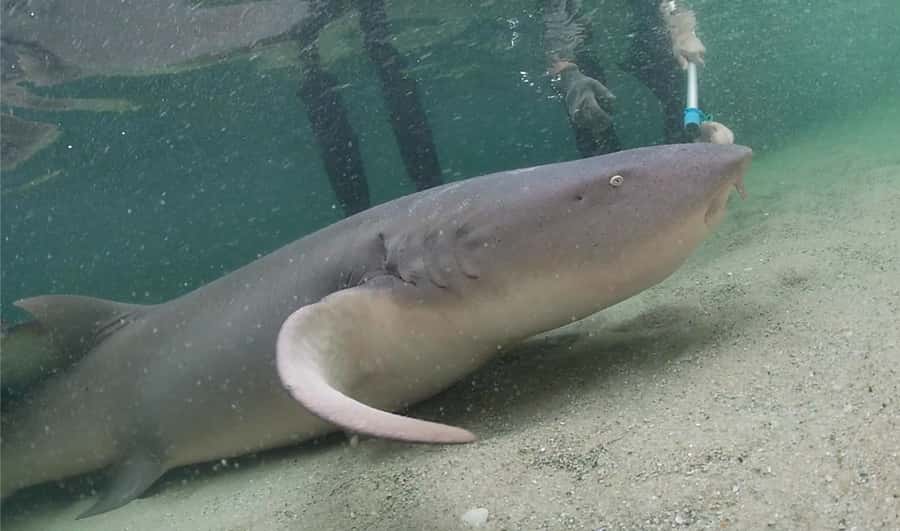
What makes Irukandji work for me is that the experience comes with education you can feel in the moment. You are not just doing a stunt. The guides talk while you are in the water, and the focus is on personalities, habits, and needs.
This is also where the reviews are strongest. People highlight staff who make everything feel safe and share cool facts along the way. That is the real value of a guided animal encounter. When a guide explains what you are seeing, you remember it differently. The sharks stop being a generic thrill and start being a set of behaviors you can recognize.
The included description explicitly frames the result as a newfound appreciation for gentle, elusive creatures and a deeper sense of stewardship for the ocean. I think that matters because it connects your adrenaline to a takeaway you can carry home.
A good example of how this shows up practically is the early orientation. When you learn how to interact safely before you enter the lagoon, you are more likely to enjoy the encounter because you are not constantly worrying if you are doing something wrong. The guide provides the equipment, shows how to enter the lagoon safely, and then keeps guiding throughout the session.
From a value standpoint, the education is also part of why the cost is reasonable. You are paying for a structured, supervised water interaction that includes gear, food, and a guided teaching component, not just entry to a viewing platform.
Rinse Off, Change, and Take Home Something Useful
After the water part, the experience stays practical. You can rinse off under a warm shower and then towel down before you head inside to change. That detail matters more than it sounds. You do not want to be scrambling for showers or damp clothing right after your main activity.
Then there is the souvenir shop. It is not just typical items. The description says there are sustainable gifts, cute fluffy toys, snacks, cold drinks, and hot coffee. I like this kind of add-on because it keeps you comfortable after the encounter, especially if you are coming from sun or a beach day.
If you want photos, consider that the activity includes the ability to use a waterproof camera. Those images usually look best when you capture the moment the sharks come close, which is more likely during the structured feeding times than random water wandering.
Price and Value at $92 Per Person: What You Get for Your Money
At $92 per person for a 2-hour activity, this is not a low-cost thing. But it is also not priced like a generic ticket. You are paying for a full, guided animal interaction that includes:
- entry fee
- shallows encounter in the lagoon, with feeding and petting
- food for sharks and rays
- a 20-minute private encounter with the reef sharks
- wetsuit and socks
- snorkel mask for viewing from above and below
For a lot of people, that bundle is the point. You are not bringing gear, not figuring out what to do in the water, and not missing the guided portion that helps you get comfortable and learn what you are seeing.
It also helps that the experience has a clear structure. You have a warm-up phase in the shallows, then a focused shark feeding segment. That means your time is used well instead of dragging. Short marine experiences can be hit-or-miss, but this one is framed as a complete interaction with a defined feeding window.
The main consideration for value is the age limit: it is not suitable for children under 12. If you are traveling with younger kids, this will not work for your whole group. If everyone is old enough, it can be one of those memorable nature experiences that actually changes how you think about marine life.
Who This Is Best For, and Who Might Feel Unsure
This encounter fits best if you want a guided, structured, hands-on animal interaction. It is especially good if you are the kind of person who likes learning in real time, not just collecting photos.
You will likely enjoy it if:
- you want to face a fear with coaching and safety guidance
- you love the idea of seeing sharks from above and below with a snorkel mask
- you are traveling as a family and everyone meets the 12+ requirement
- you want a mix of thrill and education
You might feel unsure if:
- you do not like being in cold water or wearing a wetsuit
- you are uncomfortable around sharks at close range
- you rely on sunscreen for sun safety but you need to follow the lagoon rule that sunscreen is not allowed
If you are unsure, the staff-based approach is a strong reason to consider it. They guide you through safe interaction, provide equipment, and keep the experience organized.
Should You Book the Anna Bay Irukandji Reef Shark Encounter?
Yes, if you want an up-close, guided shark feeding experience that combines safety coaching, structured timing, and real animal interaction in shallow water first, then reef feeding for 20 minutes.
I would book it if your group fits the basic requirements: 12+, comfortable with snorkel gear, and willing to follow lagoon rules about sunscreen. The value comes from the full package, not just the sight of sharks. You get food, a feeding pole setup, wetsuit and socks, and the guide-led teaching that makes the encounter click.
Skip it if you are bringing young kids, you strongly dislike close-range marine animals, or you cannot do without sunscreen and sun coverage plans that do not involve applying it in the lagoon. In those cases, the rules and the nature of the interaction will likely be more hassle than enjoyment.
If you are ready for an ocean moment that feels both intense and thoughtful, this is the kind of Anna Bay experience that leaves you talking about sharks as gentle, real creatures, not just headlines.
FAQ
Who is this reef shark encounter suitable for?
It is suitable for people aged 12+. It is not suitable for children under 12.
How long does the experience take?
The experience duration is 2 hours.
Is it a private group activity?
Yes, it is described as a private group experience.
What is included in the entry fee?
The entry fee includes the shallows encounter in the lagoon (feeding and petting), food for the sharks and rays, the 20-minute reef shark encounter, and wetsuit and socks.
What equipment do I get?
You are provided with a wetsuit and socks, and you are given a snorkel mask for viewing the sharks from above and below the water. Feeding sticks, shark food, and socks are also provided.
Do I need to bring my own wetsuit?
No. You should not bring your own wetsuit, as they say it could harbor marine life from the ocean.
Is sunscreen allowed?
The important information lists sunscreen as not allowed.
What should I bring?
Bring sun hat, swimwear, towel, waterproof camera, and biodegradable sunscreen (as listed). You will also want to follow the sunscreen rule they provide.
Where should I meet and when?
Arrive 20 minutes prior to your tawny nurse shark encounter to prepare.
Is there a way to book with flexible payment and cancellation?
The activity offers free cancellation up to 24 hours in advance for a full refund, and it also offers a reserve now and pay later option.
More Tour Reviews in Irukandji Shark Ray Encounters
Not for you? Here's more nearby things to do in Irukandji Shark Ray Encounters we have reviewed
More Port Stephens Tours
 ★ 4.4Port Stephens: Dolphin Discovery CruiseFrom $28926 reviews
 ★ 4.5Port Stephens: Unlimited Sandboarding & 4WD Sand Dune TourFrom $30540 reviews
★ 4.5Port Stephens: Dolphin Discovery CruiseFrom $32401 reviews
★ 4.5Port Stephens: Unlimited Sandboarding & 4WD Sand Dune TourFrom $30540 reviews
★ 4.5Port Stephens: Dolphin Discovery CruiseFrom $32401 reviews
 ★ 4.5Port Stephens Dolphin Cruise & Sandboarding Day TripFrom $145219 reviews
 ★ 4.4Anna Bay: Irukandji Entry Pass with Shallows EncounterFrom $29211 reviews
 ★ 5.0From Sydney: Port Stephens Dolphin, Koalas, Lunch & SandboardingFrom $142211 reviews
 ★ 4.6Port Stephens: 2.5-Hour Whale Watching & Outer Island CruiseFrom $53156 reviews
 ★ 4.7Port Stephens: Unlimited Sandboarding with 4WD Dune TransferFrom $28155 reviews
Explore related Sydney days