
REVIEW · TOURS
Sydney Fish Market Behind the Scenes Tour
Stepping into the Sydney Fish Market is a fast lesson in seafood reality. You get into the auction floor action that is usually closed off to the public, then learn how fish moves from blue crates to dinner plates. It is equal parts market show, food science, and quick explanations that make the whole system make sense.
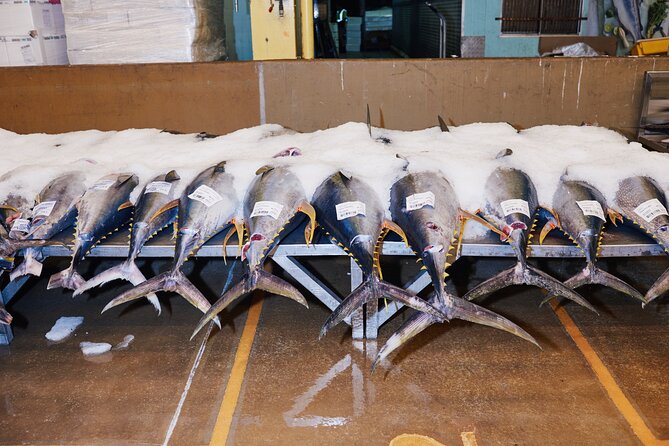
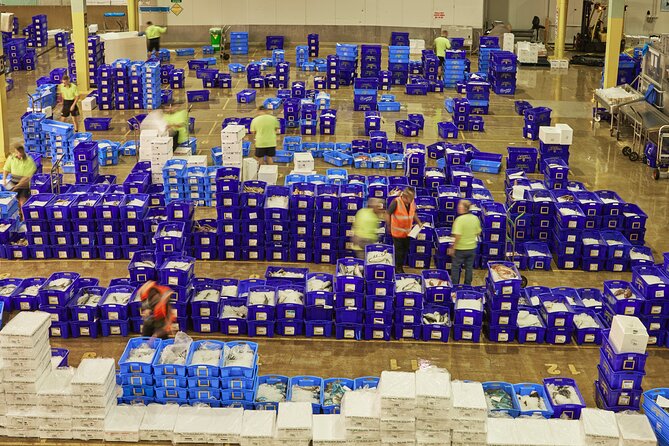
I especially loved seeing the Dutch auction system in action, including how much seafood gets traded and how buyers keep up. I also liked the hands-on feel of the live seafood preparation demos, from tuna filleting to oyster shucking, plus the lineup of over 100 species in the famous blue crates.
One thing to consider: it is an early morning stop, with check-in required by 5:50am, and you’ll be on your feet in a working auction space with rules like socks, covered shoes, and no wheelchairs or prams on the auction floor.
Key Things You Should Know Before You Go
- Auction floor access: See the hustle in a part of the market that is normally off limits to the public.
- Dutch auction explained on site: You watch the market process with 150+ buyers and sales totaling over 50 tonnes.
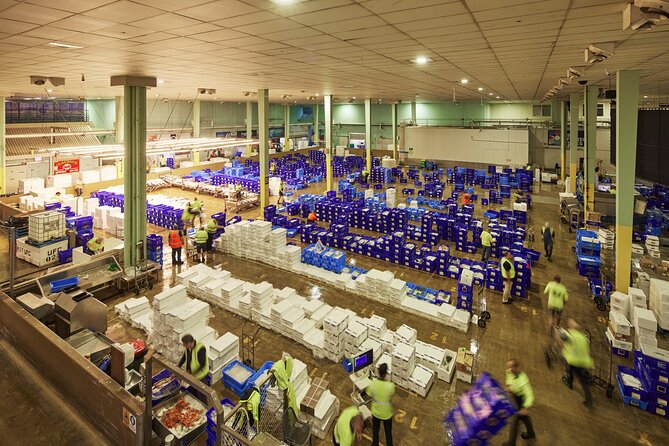
- Over 100 species in blue crates: You’ll spot familiar favorites and also weird and wonderful options you probably never order.
- Live prep demonstrations: Tuna filleting, live lobsters, sushi prep, oyster shucking, and more.
- Small group pace: Limited to 10 participants, so your guide can keep explanations clear.
- Wear-for-the-floor policy: You’ll need comfortable closed shoes, socks, and a jacket.
Entering The Sydney Fish Market With a Working-Auction Mindset
The tour starts with the feeling that this is not a showroom. The Sydney Fish Market runs like a workplace, and your guide keeps it grounded in how the auction actually functions.
You meet at the LG Information Hub at Sydney Fish Market, 1 Bridge Road, Glebe, which is on the ground level on the side closest to the city. You’ll want to show up early, because you check in by 5:50am. Even if you’re not a seafood superfan, the time matters, because you’re seeing the market at the moment it is actively doing its job.
The market also has a sense of urgency that hits quickly. You’ll be standing in an auction setting that moves product fast, with buyers watching quality and deciding what to take. That is where the behind-the-scenes part becomes real, not just interesting.
You can also read our reviews of more shopping tours in Sydney
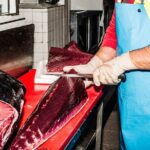
Auction Floor Energy: Watching the Marketplace at Speed
Once you’re guided into the action area, you see what most people never do: the auction floor itself. This is where seafood changes hands, and it is loud in the busy way, with people focused on speed and accuracy.
I like that the tour does not treat this like a history lecture. Instead, it explains what you are looking at, then connects it to how the market quality checks work before product moves on. If you’ve ever wondered why some seafood looks, smells, and behaves differently on a plate, this is where the logic starts.
You should also expect that the auction floor is practical and regulated. That is why you’ll get safety footwear for the floor, and the tour asks you to wear socks for comfort with the provided safety gear. Plan on being in gear that is meant for protection, not fashion.
The Dutch Auction System, Explained While You Watch It Happen
The biggest technical takeaway is the Dutch auction system, because it is the engine behind how seafood gets sold efficiently. The key detail you’ll hear is scale: the process moves more than 50 tonnes of fresh seafood to 150+ buyers.
What I appreciate is that the tour keeps the explanation tied to the visible flow. You are not just hearing a definition. You are watching the market mechanics in motion, then getting clear, simple guidance on what the auction is doing for sellers and buyers.
If you are the kind of person who wants to understand the why behind how things get priced, this section delivers. It explains that the auction is built for fresh product and fast decisions, rather than slow, one-item-at-a-time selling. By the time you step back, you’ll have a mental map of how buyers respond and how the market matches product to demand.
Guides can make a real difference here. One guide name that comes up often is Mark, an experienced fisherman who explains the auction system and the quality checks smoothly. Another guide, Mike, is also described as bringing lots of interesting facts and strong clarity. Whoever is leading your tour, you’ll want to pay attention during this part, because it turns the rest of the market into a story you can follow.
Blue Crates and 100+ Species You Can Actually Spot
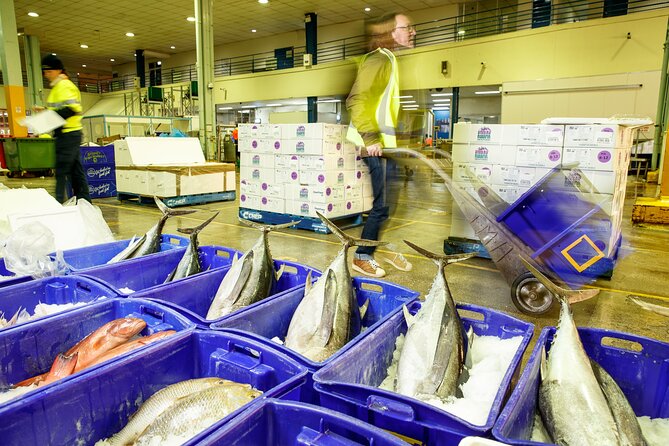
The market’s famous blue crates aren’t just a visual signature. They make it easier to see the range and the categorization of species, which is exactly what you want on a tour like this.
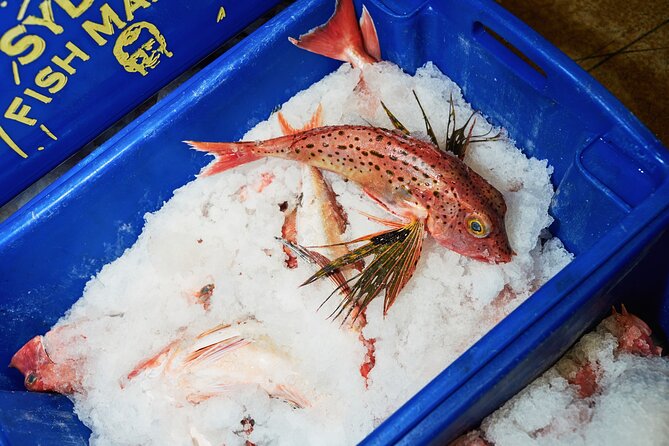
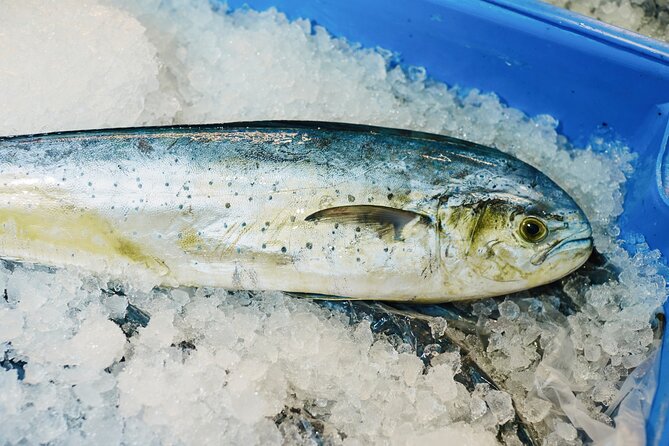
You’ll encounter over 100 seafood species during the tour. Some are fan favorites you can name, and some are the weird and wonderful types you only recognize if you have seen them on menus or fish markets before. Either way, the value is that you get real exposure, not just a list of names.
I like this part because it changes what seafood means to you. After you’ve seen how many species the market handles in one place, it is harder to think of seafood as a small, limited set of options. You start to think in terms of choices based on seasonality, handling, and what sells through the auction.
And if you enjoy food curiosity, this is where the tour feels most satisfying. You are not only watching fish get traded. You are learning what different varieties look like in real market conditions, and why certain items are treated as quality leads.
Live Prep Demos: Tuna Filleting, Lobsters, Sushi, and Oysters
One of the best parts of this tour is how much comes to life in front of you. The market doesn’t just show seafood. It demonstrates how seafood gets prepared for the next step in the chain.
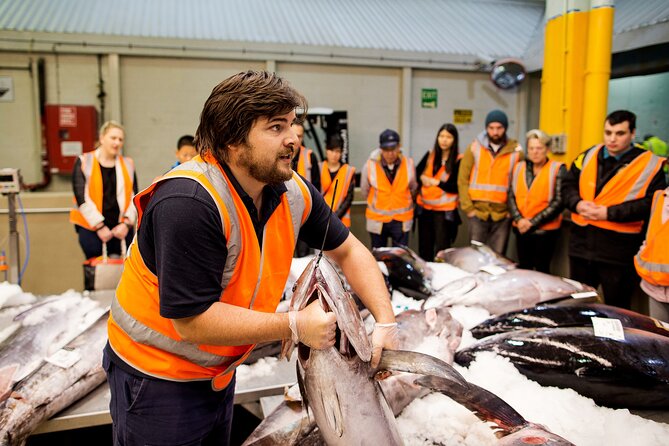
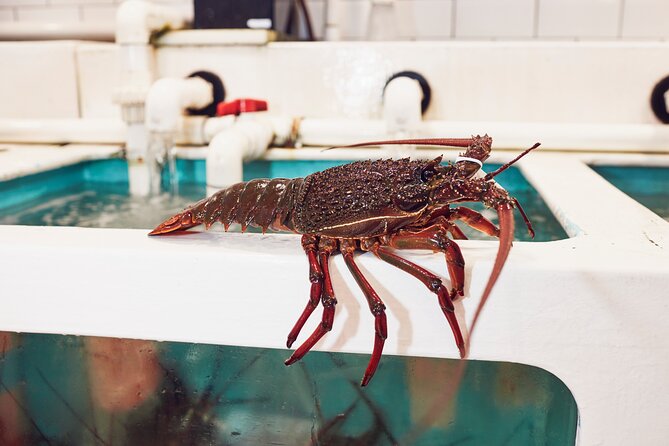
You can expect live demonstrations such as tuna filleting, plus seeing live lobsters. There is also sushi prep and oyster shucking. This is the section where your brain switches from auction logic to kitchen reality.
Why this matters for you: it connects the auction side to the food you actually eat. When you watch filleting or shucking in real time, you start to understand what skills and speed look like when product is fresh. It also helps you appreciate why seafood quality is so important, because handling affects texture and flavor in very practical ways.
It also makes the tour fun, even if you are not the sort of person who reads seafood labels for fun. Seeing a lobster live and watching oysters get shucked gives the tour energy and keeps it from turning into pure logistics.
- Blue Mountains Small-Group Tour from Sydney with Scenic World,Sydney Zoo & Ferry
★ 5.0 · 3,709 reviews


Safety, Comfort, and Rules on a Real Working Floor
Because this is a working auction floor, the tour comes with clear rules, and I’m glad they do. It keeps the experience smooth for everyone, including you.
Bring a jacket and wear comfortable shoes. Socks matter, because you’ll need them for comfort with the safety footwear you are provided. The rules also say no open-toed shoes, no high-heeled shoes, and no hats.
Other restrictions are straightforward: smoking and littering are not allowed. You should also note there’s no wheelchair or pram access on the auction floor, so this tour is not suitable for wheelchair users. Children under 10 years also are not recommended, which makes sense because the environment is not built for small legs and slow pacing.
The practical tip I’ll give you: treat this like a morning you dress for work, not for sightseeing. If you show up in stiff shoes or forget socks, you’ll feel it quickly once you’re standing and moving on the floor.
Price and Value: Is $56 Worth It for 2 Hours?
At $56 per person for a 2-hour small-group tour, you are paying for access and for guided interpretation. You are not paying for a meal, because food and drinks are not included.
So the value question is really this: do you want to see the market process up close, and do you want someone to connect what you see to what it means? If yes, the price feels reasonable because you get several high-impact things in one package:
- access to the auction floor area that is normally closed to the public
- an explanation of the Dutch auction system while you observe it
- exposure to over 100 seafood species in the blue crates
- live preparation demonstrations, including tuna filleting and oyster shucking
- safety footwear supplied, plus a live guide working with a small group
It is also limited to 10 participants, which matters more than it sounds. With small groups, you get fewer long pauses and more time to ask questions during the moments that actually matter.
If you are mainly looking for a casual stroll with minimal rules and lots of time to wander, this might feel too structured. But if you want an efficient, high-information tour that makes the market understandable, it is a strong value.
Who This Tour Suits Best
This is a great fit if you like food systems, not just food. You’ll enjoy it if you want to understand how seafood becomes seafood, including quality checks and the auction process.
It also works well for practical travelers who want something memorable and local without guessing. The market is working infrastructure, and the tour gives you the map so you know what you are looking at.
On the other hand, it may not suit you if:
- you want a relaxed, slow-paced experience
- you need wheelchair or pram access on the auction floor
- you are traveling with children under 10
If you’re undecided, ask yourself one question: do I want to watch seafood handling and auction mechanics, or do I only want to look at a fish market from the outside? This tour answers the first question directly.
Should You Book the Sydney Fish Market Behind-the-Scenes Tour?
Book it if you want an early-morning, high-clarity explanation of how seafood goes from the auction floor to your plate, with real demonstrations and a strong small-group feel. The combination of Dutch auction context, 100+ species in blue crates, and live prep like tuna filleting and oyster shucking makes it more than a quick look around.
Skip it if the early check-in and working-floor rules sound like stress for you. Also skip if accessibility needs on the auction floor are part of your planning.
If you do book, come prepared to move, bring socks and closed shoes, and treat the tour like a working lesson. You’ll leave with a much better sense of why the market runs the way it does, and you’ll recognize more seafood when you see it later.
FAQ
Where is the meeting point for the Sydney Fish Market tour?
You meet at the LG Information Hub at Sydney Fish Market, 1 Bridge Road, Glebe, located on the ground level on the side closest to the city.
How long is the tour?
The tour duration is 2 hours.
What is the price per person?
The price is $56 per person.
What is included in the tour price?
The tour includes a guided tour of the Sydney Fish Market, safety footwear for the auction floor, and live demonstrations of seafood preparation.
Are food and drinks included?
No. Food and drinks are not included.
What should I wear or bring for the auction floor?
Bring comfortable shoes, a jacket, and socks. The tour provides safety footwear for the auction floor.
What footwear is not allowed?
High-heeled shoes and open-toed shoes are not allowed.
Is the tour suitable for children?
It is not suitable for children under 10 years.
Can wheelchair users or prams join the auction floor part?
No. Wheelchair users and prams are not allowed on the auction floor.
What time should I arrive for check-in?
You should arrive by 5:50am for check-in.
More Shopping Tours in Sydney
More Tours in Sydney
- Blue Mountains Small-Group Tour from Sydney with Scenic World,Sydney Zoo & Ferry
★ 5.0 · 3,709 reviews
More Tour Reviews in Sydney
- Blue Mountains Small-Group Tour from Sydney with Scenic World,Sydney Zoo & Ferry
★ 5.0 · 3,709 reviews
Not for you? Here's more nearby things to do in Sydney we have reviewed



More Tours
 ★ 4.8Opera House Guided Tour with Entrance TicketFrom $338,312 reviews
 ★ 4.5Sydney Opera House Official Guided Walking TourFrom $343,770 reviews
 ★ 5.0Blue Mountains Small-Group Tour from Sydney with Scenic World,Sydney Zoo & FerryFrom $1613,709 reviews
 ★ 4.8Blue Mountain: Small-Group Tour with Lunch & Scenic WorldFrom $1373,009 reviews
 ★ 4.4Big Bus Hop-On Hop-Off Tour with Optional CruiseFrom $512,697 reviews
 ★ 4.0Big Bus Sydney and Bondi Hop-on Hop-off TourFrom $522,690 reviews
 ★ 4.8From Sydney: Blue Mountains Tour with Waterfall Walk & LunchFrom $852,400 reviews
 ★ 5.0Harbour Sunrise Kayak TourFrom $1191,899 reviews